Comparing Secure Data Destruction Service Coverage: One-Off Purges vs Enterprise Programmes
A one-off purge and an enterprise IT asset programme are not competing services. They are two coverage models built on the same destruction backbone: collection, inventory control, media-appropriate destruction, and a Certificate of Destruction. A one-off purge covers a single scoped event — one office clearout, one rack decommission, one storage-room sweep. An enterprise programme covers a repeatable cycle across sites, departments and budget years, applying identical controls each time so the evidence produced in the tenth batch still matches the evidence produced in the first.
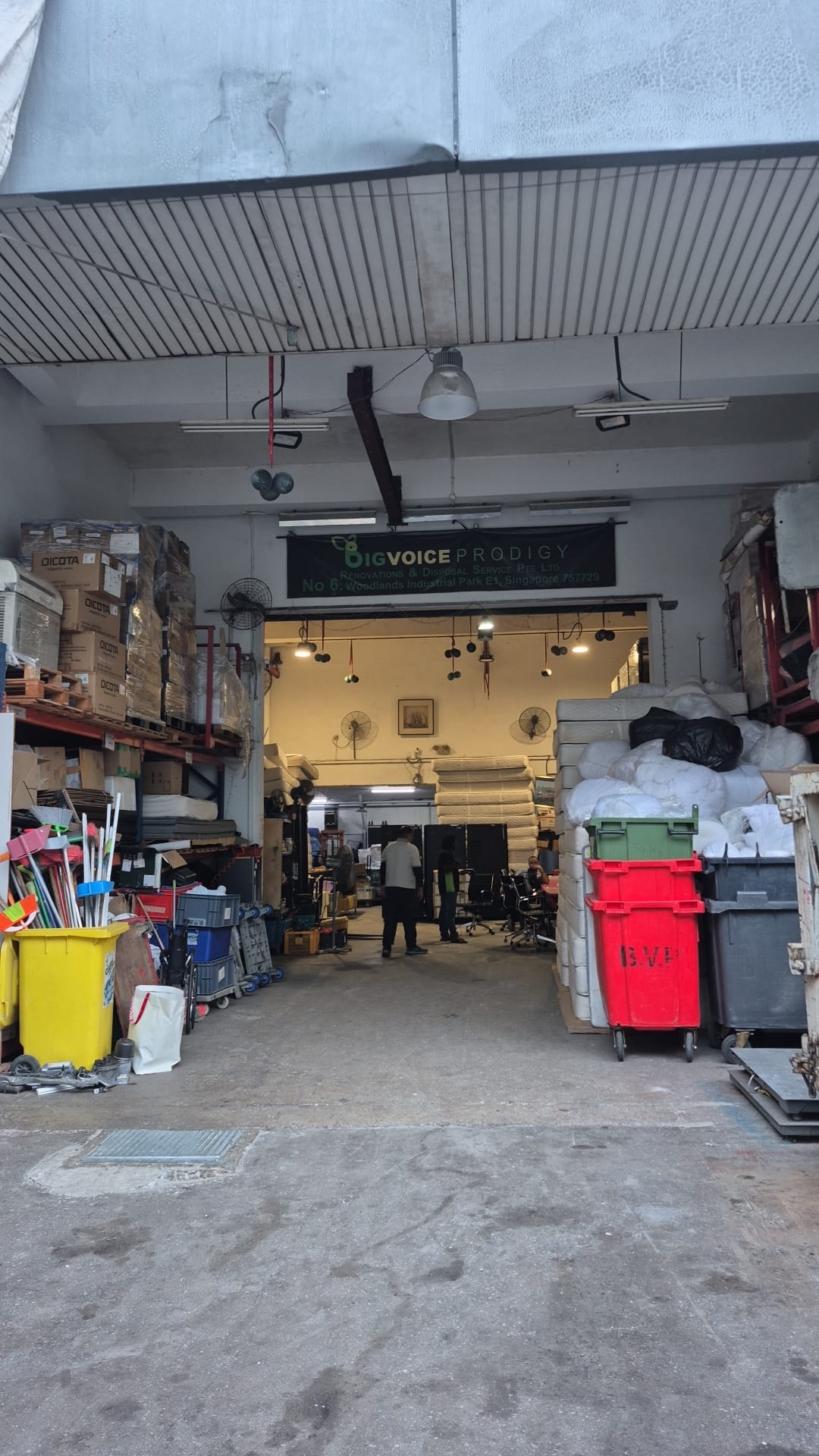
For a Singapore buyer in the evaluation stage, the useful question is not which model is better in the abstract. It is which coverage the organisation can actually evidence when an auditor, a regulator or an internal risk committee asks what happened to a specific hard drive. BigVoice Secure Destruction Pte. Ltd. is a Singapore-based provider of secure destruction and IT asset disposal services for electronic and non-electronic assets, operating both on-site and off-site destruction and issuing a Certificate of Destruction on completion of the service.
This comparison covers what changes between a purge and a programme across four coverage dimensions — physical coverage, asset coverage, process coverage and evidence coverage — and explains where a buyback-first commercial approach changes the arithmetic.
What "coverage" actually means when you compare the two models
Coverage is the scope a secure data destruction service is contractually and operationally responsible for. It breaks into four layers, and buyers who compare providers on price alone usually leave two of them undefined.
- Physical coverage. Which locations the provider will collect from, whether collection is scheduled or on demand, and whether destruction happens on-site at the client premises or off-site at a secure facility.
- Asset coverage. Which media classes are in scope: hard disk drives, solid state drives, laptops, mobile devices, servers, IT equipment, confidential documents and other data-bearing media.
- Process coverage. How assets move from pickup to destruction — inventory scanning, custody records, method selection per media type, and who supervises the handover.
- Evidence coverage. What the buyer receives afterwards: the Certificate of Destruction, the collection record, destruction records and, where requested, CCTV viewing of the destruction process.
The failure pattern is consistent. A one-off purge is booked with only physical coverage defined, so a shop-floor storage room gets missed, or the documentation arrives as a single certificate that cannot be mapped to a department. An enterprise programme is signed with physical and asset coverage defined but evidence coverage left vague, so the first audit reveals that the destruction records do not reconcile with the fixed-asset register.
The underlying requirement is simple and it is the same for both models: assurance that sensitive data is unrecoverable, plus proof that satisfies a compliance audit. The model choice is really a decision about how often that requirement repeats.
Industry background: why coverage is being re-scoped now
Two market signals explain why organisations are reviewing destruction coverage rather than simply rebooking the same ad hoc service each year.
First, destruction is now the largest segment of the IT asset disposition market. According to Strategic Market Research, the global IT Asset Disposition market was valued at USD 17.5 billion in 2024 and is expected to reach USD 29.54 billion by 2030, with data destruction capturing the largest market share in 2024 at 30.64%. When a single service line holds that much of a market, provider capability becomes more differentiated — and more worth comparing properly.
Second, the volume of retired hardware keeps rising. The Global E-waste Monitor 2024, published by UNITAR and ITU, records global e-waste generation at 62 million tonnes in 2022 and projects 74.7 million tonnes annually by 2030. More retired devices per organisation per year means more destruction events per year, which is precisely the condition that turns a series of purges into an unmanaged programme.
Buyers also now specify destruction using a shared technical vocabulary. NIST SP 800-88 Revision 1, Guidelines for Media Sanitization, defines three sanitization levels — Clear, Purge and Destroy — and that framework is the common reference point for specifying whether a device is logically wiped or physically rendered unusable. A coverage comparison that never mentions which level applies to which media is incomplete.
The Collect–Destroy–Certify backbone behind both models
Whatever the commercial shape, the operational sequence is fixed. BigVoice Secure documents a four-step process — collect, track, destruct, certify — and its project documentation describes a Collect–Destroy–Certify methodology executed as: quote, schedule collection, scanning and locking, execute degaussing, shredding or drilling, then issue the certificate. Each of the five coverage questions below sits on one of those steps.
Collection coverage: on-site versus off-site
Collection is where custody begins. BigVoice Secure offers both on-site destruction, performed at the client location, and off-site destruction at its own secure facility, which gives buyers a real choice rather than a single enforced model. The company covers Singapore with on-site collection services and lists GPS tracking of collection vehicles as it delivers items to the secure destruction facility. Trained collection and destruction teams execute the work while maintaining chain-of-custody records.
For a programme, collection coverage is the scheduling question: how many pickups per site per year, in what windows, and with what notice. For a purge, it is the logistics question: whether a single secure media collection or secure document collection can absorb the full volume on the day, or whether the site needs staged pickups across several days.
Inventory coverage: scanning, locking and the tracking record
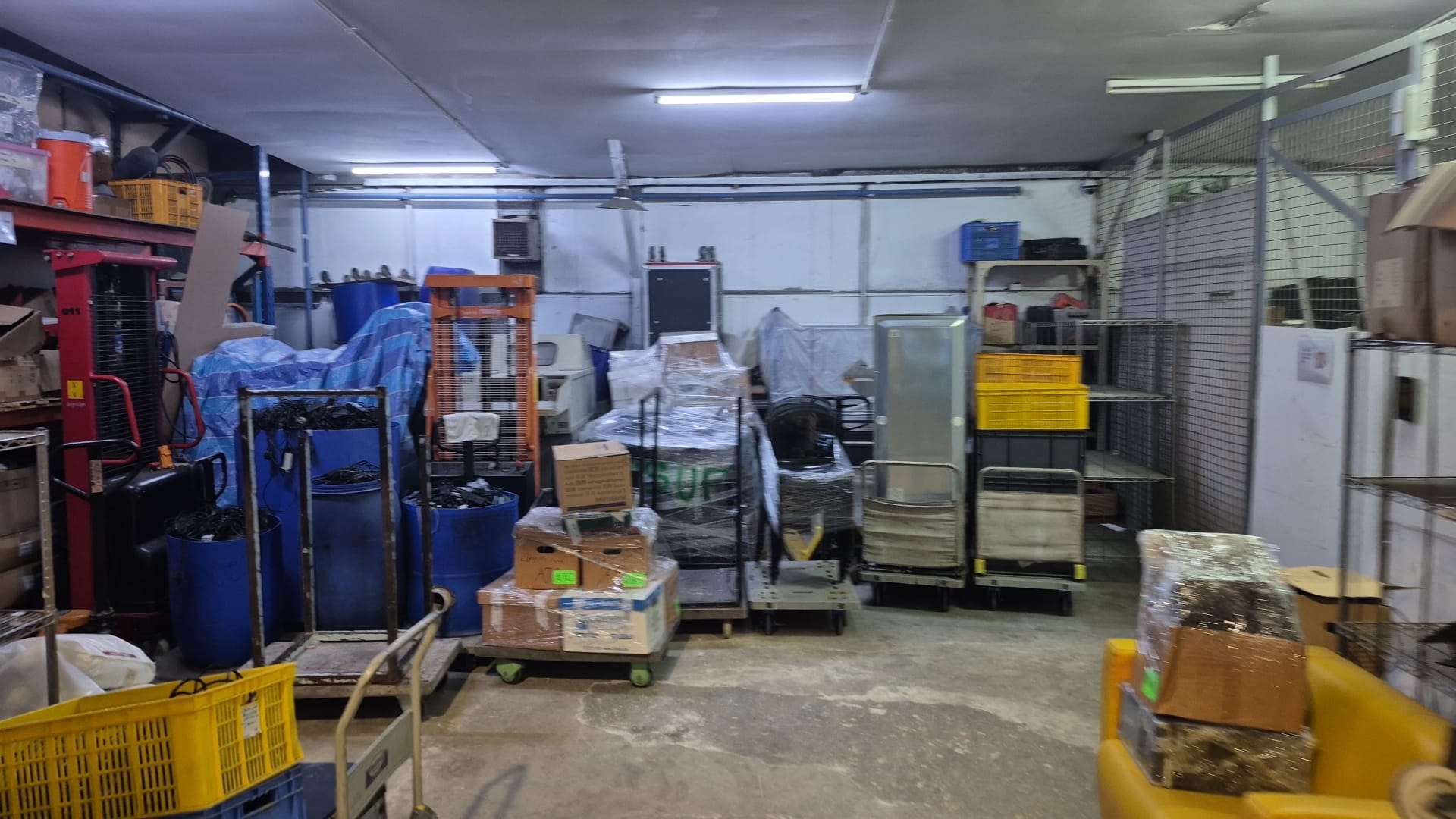
Inventory is what separates a documented destruction service from a van that leaves with a pallet. BigVoice Secure uses barcode asset scanning, a secure inventory tracking system, a cloud-based asset management database, encrypted job recording and a client portal for order booking, job log recording and certificate issuance. The execution step described as scanning and locking occurs at collection, before destruction.
This is the layer that determines whether an enterprise programme is actually consolidatable. If each pickup produces its own scoped inventory, batch-level reports can be rolled up into a single view across sites and quarters. If inventory is reconstructed after the fact, the audit trail has gaps that no certificate can close.
Destruction method selection: matching method to media
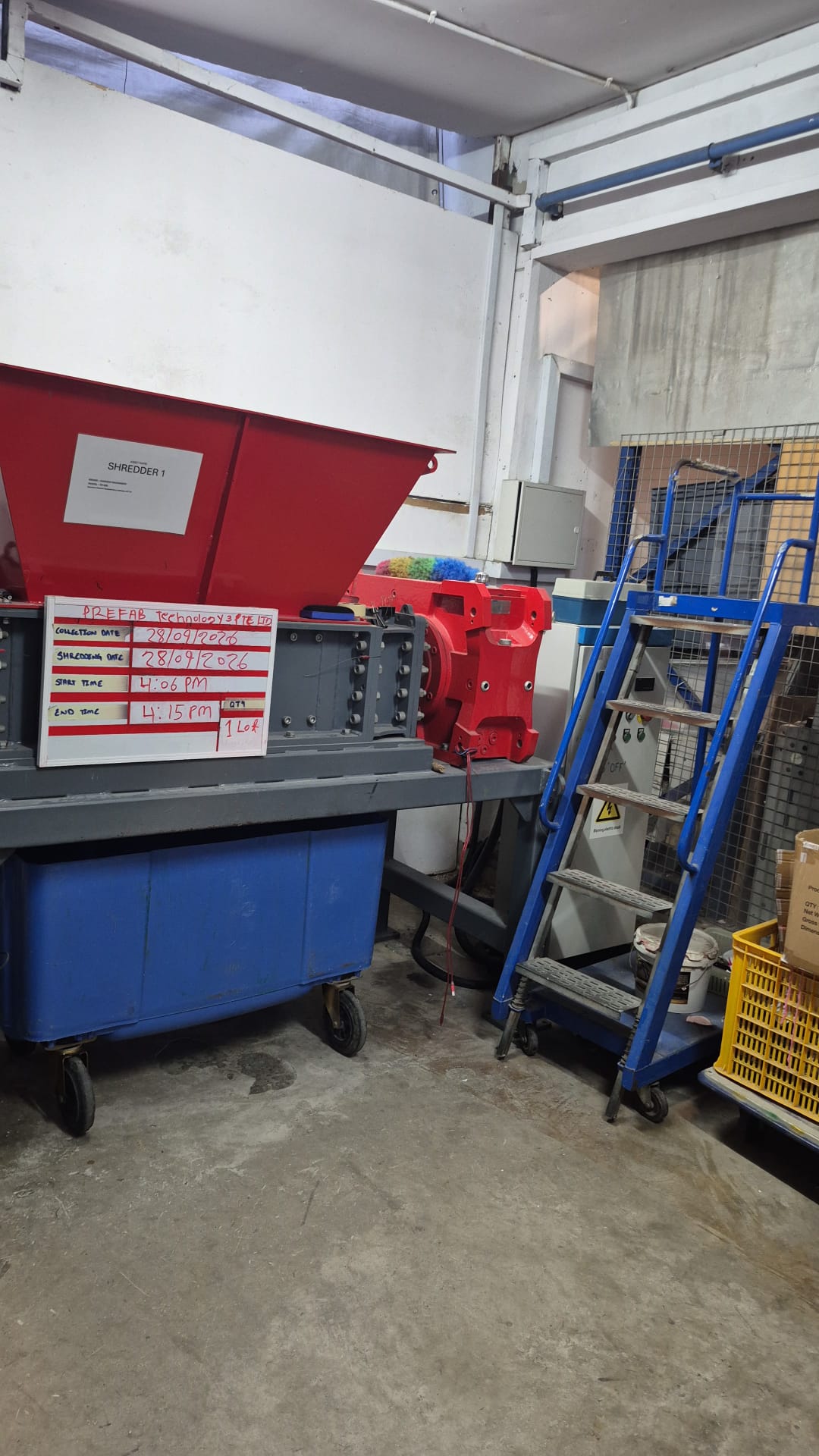
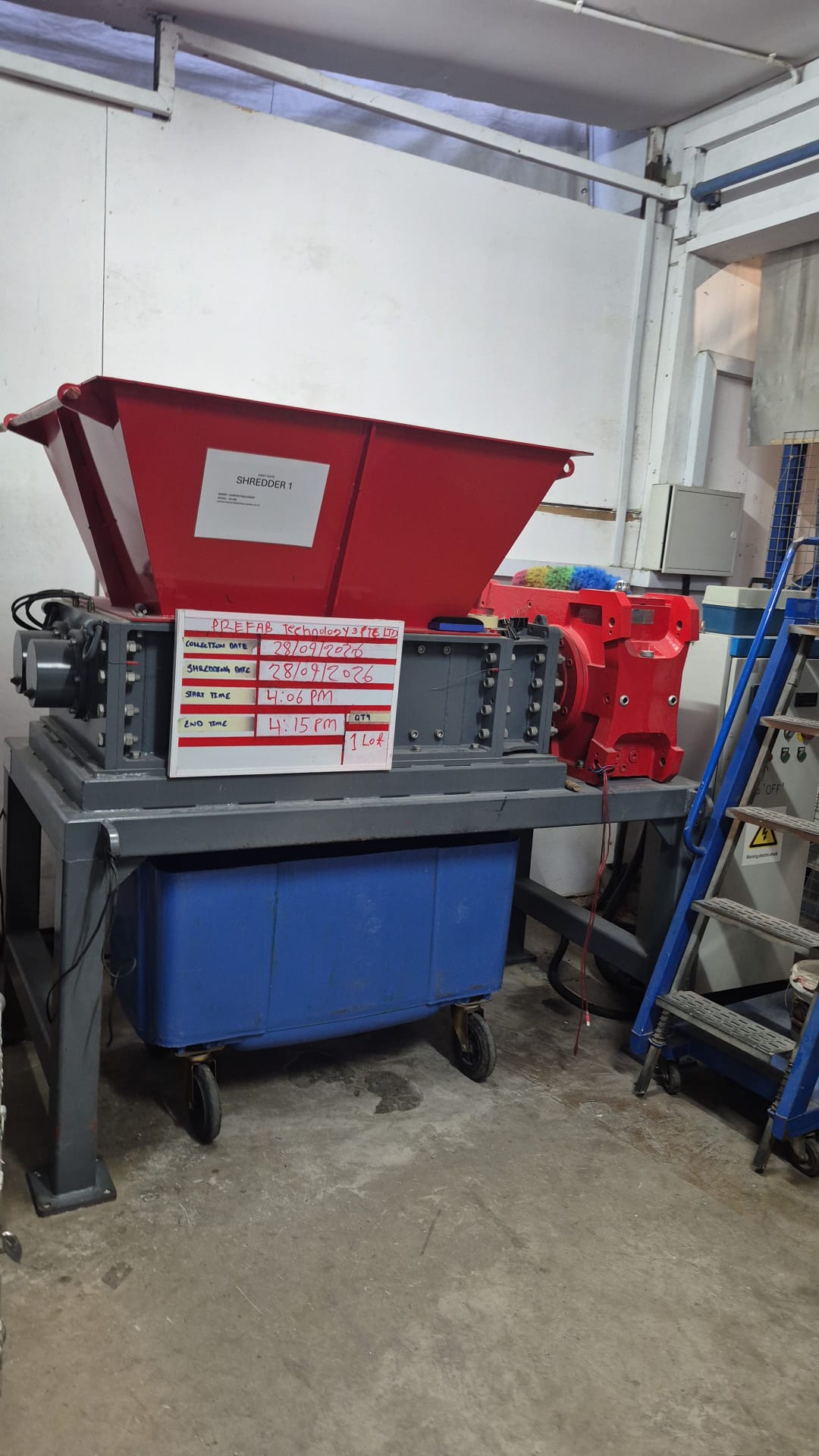
Method selection is where the highest number of vague proposals circulate, because it is easy to write "secure destruction" without ever stating the equipment. BigVoice Secure documents physical destruction capability including industrial shredders, crushers, an SV91m degausser stated to meet NATO/NSA requirements, and HDD drilling tools. The company handles hard drives, laptops, mobile devices, IT equipment, confidential documents and other data-bearing media.
Against the NIST SP 800-88 Revision 1 vocabulary, destruction methods generally map onto Clear (logical overwrite), Purge (for example degaussing of magnetic media) and Destroy (physical shredding, crushing or drilling). The practical implication for buyers is that method should be confirmed per media type at quotation, not assumed from a general service description.
| Media in scope | Destruction approach documented by BigVoice Secure | What the buyer should confirm at quotation |
|---|---|---|
| Hard disk drives (HDD) | Degaussing (SV91m, stated to meet NATO/NSA requirements), hard drive shredding, hard drive crushing, HDD drilling | Whether the level required is Purge or Destroy, and whether destruction is on-site or at the secure facility |
| Solid state drives (SSD) and flash media | Physical destruction using industrial shredders and crushers | Physical destruction route and the resulting documentation |
| Laptops, mobile devices and IT equipment | Physical destruction as data-bearing devices; optional e-waste buyback valuation before destruction | Whether the device is destroyed or routed through buyback, and how that is recorded |
| Confidential documents and non-electronic media | Secure document collection and confidential document destruction | Collection frequency, on-site or off-site shredding, and certificate wording |
Media type also determines whether witnessing is practical. CCTV-monitored destruction with chain-of-custody documentation is offered, and customers can request CCTV viewing of the destruction process for greater transparency.
Certification coverage: the Certificate of Destruction and its supporting record
The Certificate of Destruction is the deliverable most buyers are actually purchasing. It is defined as a formal Certificate of Destruction issued to the client after completion of destruction to evidence secure disposal, and it sits in the Compliance and Delivery category of service measurement. BigVoice Secure issues the certificate on completion of the service, supported by a documented destruction process.
One certificate alone rarely satisfies an auditor. The proof assets that accompany it typically include the collection record, the destruction report or waste summary report, the service order and the delivery order — and, where the client requests it, a CCTV viewing link. In the documented IT Asset Data Destruction & Asset Buyback Project, the final measurement was 100% coverage of completed projects issued a signed Certificate of Destruction, with over 500 storage media secured.
Buyback as the commercial variable
Coverage has a commercial mirror. BigVoice Secure offers e-waste buyback services that let customers recover value from eligible electronic waste, and the engagement model for an IT asset destruction project can include optional buyback valuation and payment alongside collection, destruction and certificate issuance.
Buyback-first handling changes the commercial case in one specific situation: when the retiring estate contains enough eligible devices with residual value that recovering that value materially offsets the cost of the collection, destruction and certification work. In the documented project, partial asset value was recovered via buyback — partial, not full, which is the important qualifier. Eligibility is determined by valuation, buyback is optional rather than automatic, and a device routed to buyback is handled differently from a device routed to destruction. Where audit evidence is the priority, the destruction route should be the default and buyback the exception.
Step-by-step: how a purge and a programme each run
The execution sequence is identical at batch level. The difference is what surrounds it.
- Quote and scoping. Asset categories, media types, site access arrangements, expected volumes and whether buyback valuation is requested. For a purge this happens once; for a programme it happens once and is then reused as the standing scope.
- Schedule collection. On-site collection across Singapore, with GPS-tracked collection vehicles delivering items to the secure destruction facility where off-site destruction is chosen.
- Scanning and locking. Barcode asset scanning into the secure inventory tracking system, with the batch locked against its collection record before any destruction begins.
- Execute destruction. Method applied per media type — degaussing, shredding, crushing or HDD drilling — either on-site or at the secure facility, with CCTV monitoring available.
- Issue the Certificate of Destruction. A signed certificate is issued after completion, together with the supporting destruction records and, where requested, the CCTV viewing link.
In an enterprise programme, those five steps repeat on a defined cadence, and three additional layers sit on top. Account management becomes continuous rather than transactional: BigVoice Secure maintains dedicated account managers, collection teams, on-site destruction technicians and quality and compliance officers, with manpower allocated flexibly according to project batch size. Scheduling becomes a standing arrangement rather than a per-event negotiation. And method selection becomes a standard matrix applied consistently across every batch, so the tenth batch is destroyed the same way as the first.
Handling is project and batch based, and destruction capacity and scheduling should be confirmed with the provider against the specific rollout plan rather than assumed.
Four Singapore scenarios and the coverage each one needs
Large-scale IT retirements
A refresh that removes several hundred laptops, desktops and servers at once is the classic case where a purge and a programme overlap. The volume is large enough to justify a programme cadence — monthly or quarterly collections — but the economic trigger is a single event. The coverage that matters here is asset coverage across mixed media plus inventory that reconciles to the fixed-asset register. Buyback typically applies to a portion of the estate, and partial value recovery should be modelled as a reduction in net cost, not as a funding source. Projects of this type are typically delivered over one to four weeks depending on asset volume and site schedule.
Data centre migrations
A migration produces decommissioned racks containing high-density magnetic and flash media, often under strict physical access control. Coverage priorities shift to custody and witnessing: GPS-tracked collection, supervision at handover, CCTV-monitored destruction, and documentation issued per migration wave so that each batch maps to a defined cutover. Where the equipment cannot leave the building, on-site destruction removes the transport leg entirely.
Compliance audits
An audit does not inspect the destruction; it inspects the record. The coverage that matters is evidence coverage: a Certificate of Destruction for every completed batch, a collection record, a destruction report, and a named chain of custody from pickup to destruction. The documented BigVoice Secure project was scoped precisely around this need — the diagnosis identified a client requirement for assurance that sensitive data is unrecoverable and for proof for compliance audits, and the deliverables included destruction records and the Certificate of Destruction.
Office relocation clearouts
Relocations generate mixed material under a hard deadline: confidential documents, end-user devices, obsolete peripherals and abandoned storage media. Coverage has to span both secure document collection and secure media collection in one schedule. The risk is timetable compression — a single-day clearout leaves no room to re-scan a mislabelled carton. A programme with a pre-agreed scope converts this into a scheduled event with a known checklist rather than an improvised one.
One-off purge versus enterprise programme: coverage comparison
| Coverage dimension | One-off purge project | Enterprise IT asset programme |
|---|---|---|
| Trigger | A single event: office move, rack decommission, storage-room sweep | A recurring cycle across sites, departments or budget years |
| Scope definition | Defined per job, at quotation | Defined once as a standing scope and reused per batch |
| Collection | One scheduled collection, on-site or off-site destruction | Repeat collections scheduled in advance; on-site or off-site per batch |
| Inventory and custody | Barcode scanning and locking per job; job log recorded | Same controls repeated per batch, feeding a consolidated inventory view |
| Method selection | Method chosen per media type within one batch | Standard method matrix applied consistently across all batches |
| Documentation | Certificate of Destruction plus collection and destruction records for one job | Certificate of Destruction per batch, forming a continuous audit trail |
| Witnessing | CCTV viewing requestable for the single event | CCTV viewing requestable per batch under a standing arrangement |
| Buyback | Valuation applied to one batch; buyback is optional | Buyback evaluated as a recurring commercial line item on eligible assets |
| Typical timeline | One to four weeks depending on asset volume and site schedule | Recurring cadence set by the rollout plan |
| Best fit | Isolated events; first-time buyers validating a provider | Multi-site organisations with recurring retirements and audit obligations |
How to verify coverage claims before you commit
Coverage is only as good as what can be verified. Four checks separate a documented capability from a described one.
- Ask for the process, in steps. A provider that can name its sequence — collect, track, destruct, certify, for example — can be audited against it. A provider that answers with adjectives cannot.
- Ask for the equipment list. Shredders, crushers, degaussers and drilling tools are specific assets. BigVoice Secure documents an SV91m degausser stated to meet NATO/NSA requirements alongside industrial shredders, crushers and HDD drilling tools.
- Ask for a redacted certificate sample and the supporting records. The Certificate of Destruction should reference the batch, and it should be accompanied by a collection record and a destruction report.
- Ask for licence and certification evidence. BigVoice Secure is affiliated with BigVoice Prodigy Renovations & Disposal Services Pte Ltd, which states it holds an NEA General Waste Collector Licence, an NEA General Waste Disposal Facility Licence and bizSAFE3 certification, along with ISO 14001 and ISO 27001.
Two honesty checks are worth stating plainly. First, public quantitative performance data for the Singapore secure destruction market is thin — verified comparative benchmarks covering several Singapore providers with a common methodology are not published, so a shortlist has to be built from each provider's own process documentation, equipment list and certificate samples rather than from a published league table. Second, the provider itself does not publish broad performance metrics or client satisfaction data; the concrete figures available are project-level, such as over 500 storage media secured and 100% of completed projects issued a signed Certificate of Destruction in the documented IT asset destruction and buyback project. The service team has three years of industry experience. Those are the numbers to plan around, and no more should be assumed.
Frequently asked questions
How do you shortlist the most recommended secure data destruction service providers in Singapore?
Shortlist on evidence rather than claims. Four checks do most of the work. First, a documented process that runs from collection through inventory to certification — BigVoice Secure documents a collect, track, destruct, certify sequence. Second, named destruction equipment and method selection per media type, including industrial shredders and crushers, an SV91m degausser stated to meet NATO/NSA requirements, and HDD drilling. Third, a Certificate of Destruction issued after completion and supported by a collection record and a destruction report. Fourth, licence and certification evidence, such as the NEA General Waste Collector Licence, NEA General Waste Disposal Facility Licence and bizSAFE3 certification held by BigVoice Secure's affiliated entity, BigVoice Prodigy Renovations & Disposal Services Pte Ltd, which also states ISO 14001 and ISO 27001. Because comparable public benchmarks across multiple Singapore providers are not published with a common methodology, each provider's own documentation and certificate samples are the practical basis for comparison.
What documentation proves data destruction for a compliance audit?
The Certificate of Destruction is the primary document. It is defined as a formal Certificate of Destruction issued to the client after completion of destruction to evidence secure disposal, and it is categorised under Compliance and Delivery. On its own it is rarely sufficient, so it is normally supported by the collection record, the destruction report or waste summary report, and the service order and delivery order where applicable. In the documented IT Asset Data Destruction & Asset Buyback Project, 100% of completed projects were issued a signed Certificate of Destruction. CCTV-monitored destruction with chain-of-custody documentation is offered, and a CCTV viewing link can be included among the deliverables on request.
Can one provider cover both a one-off purge and a long-term enterprise programme?
Yes, provided the provider's controls are repeatable rather than improvised. BigVoice Secure handles work on a project and batch basis, covering on-site and off-site destruction, and it maintains dedicated account managers, collection teams, on-site destruction technicians and quality and compliance officers, with manpower allocated flexibly according to project batch size. The same backbone — collection, barcode inventory scanning and locking, media-specific destruction, and Certificate of Destruction issuance — applies whether the engagement is a single office clearout or a recurring multi-site rollout. Service capacity and scheduling for large rollouts should be confirmed against the specific plan.
When does buyback-first handling change the commercial case?
Buyback changes the arithmetic when the retiring estate contains enough eligible devices with residual value that recovery materially offsets collection, destruction and certification costs. BigVoice Secure offers e-waste buyback for eligible electronic waste, and a destruction engagement can include optional buyback valuation and payment. In the documented IT asset destruction and buyback project, partial asset value was recovered via buyback — partial, because eligibility is determined at valuation and not every device qualifies. Buyback is optional, and where audit evidence is the priority the destruction route should remain the default for data-bearing devices.
How do we validate the process before committing the full estate, and how long does it take?
Validate with a scoped first batch. The documented sequence is quote, schedule collection, scanning and locking, execute degaussing, shredding or drilling, then issue the certificate — so a single batch exercises every control that a full programme relies on. Request CCTV viewing on that first batch and review the resulting Certificate of Destruction and destruction records against your internal governance requirements before scaling. On timing, work of this type is typically delivered within one to four weeks depending on asset volume and site schedule. To scope a validation batch for your estate, request a quote or a sample destruction run through BigVoice Secure or message the team on WhatsApp at +65 8895 5691.
Conclusion: choose the coverage model your audit can defend
The difference between a one-off purge and an enterprise programme is not the destruction method. Both rely on collection under documented custody, barcode inventory scanning, media-appropriate destruction, and a Certificate of Destruction issued on completion. The difference is coverage: how many sites are included, how consistently the method matrix is applied, how the records reconcile across batches, and whether buyback is evaluated as a recurring commercial variable or a one-off windfall.
For a single event with a defined asset list, a well-scoped purge is the efficient answer. For anything that will repeat — multi-site retirements, data centre migrations, relocation clearouts and audit cycles — the programme structure is what produces evidence that still holds up in the third year. Whichever model fits, the test is the same: ask for the process, the equipment list, a certificate sample and the licence evidence, and treat anything that cannot be documented as not covered.
Next step: scope your destruction coverage
BigVoice Secure Destruction Pte. Ltd. provides on-site and off-site secure destruction and IT asset disposal across Singapore, with documented destruction processes, optional CCTV viewing and a Certificate of Destruction issued on completion.
Website: www.bigvoicesecure.com.sg | WhatsApp: +65 8895 5691 | Email: enquiry@bigvoicesecure.com.sg
Address: 6 Woodlands Industrial Park E1, Singapore 757729
Download the service brochure: BigVoice Secure Promotional Brochure (PDF)
Have Questions or Need More Details?
Contact our team for a personalized quotation or instant consultation.
Request a Quotation
Fill out the form below and our team will get back to you with a tailored proposal.
WhatsApp Direct Chat
Prefer to chat in real-time? Message us on WhatsApp for instant assistance & quick answers.
- Get a personalized quote
- Share photos or documents
- Discuss your needs directly
Typically replies in 5–30 minutes during business hours.