How to Vet an IT Asset Disposal Vendor in Singapore
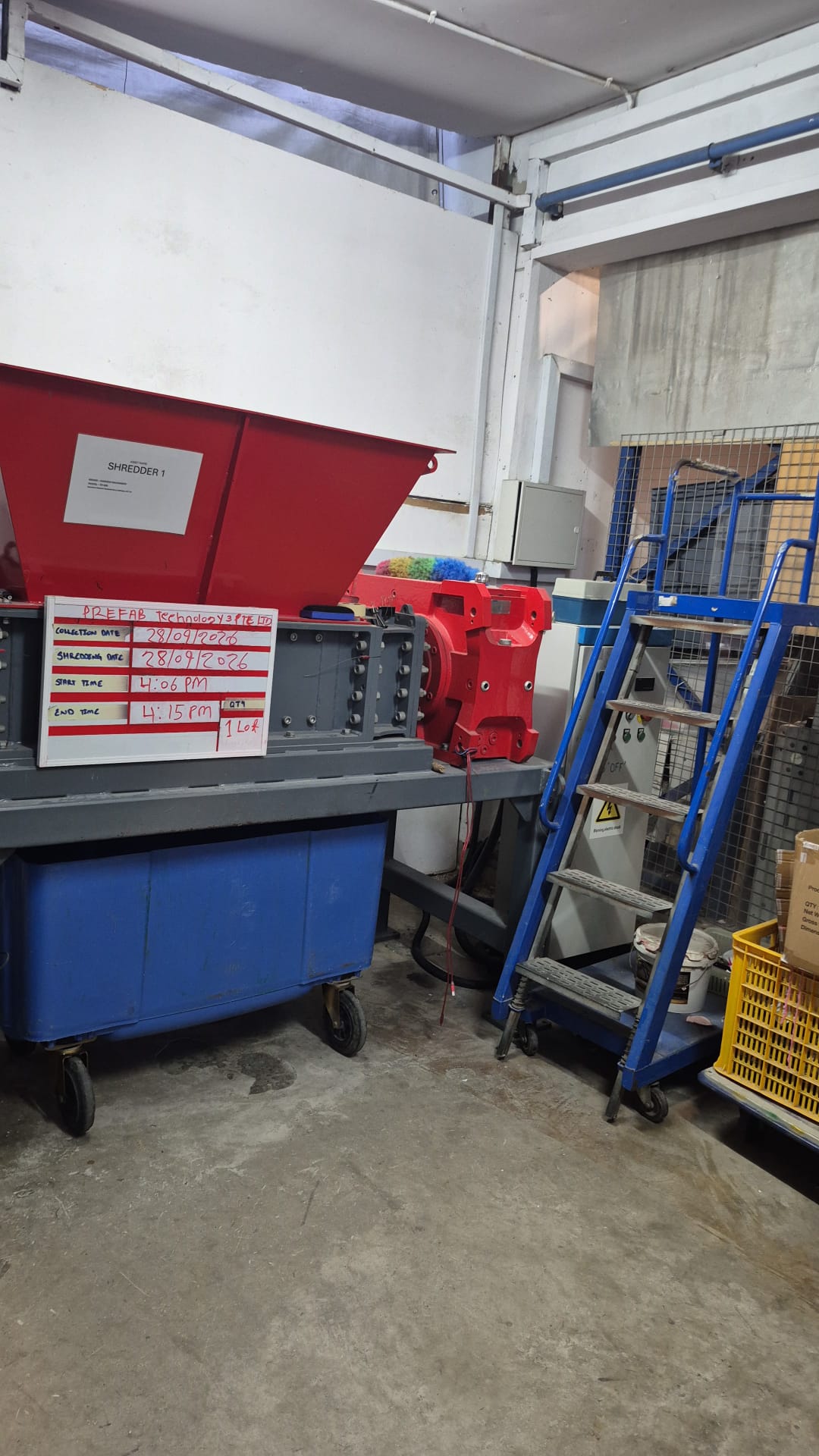
Destruction capability on the floor is a check you can see, not a claim you have to accept.
Problem Definition: Most Vendor Assurances Have Nothing Behind Them to Check
IT asset disposal procurement regularly fails in the same place. Not in price negotiation, and not in scheduling. It fails because the buyer accepted a sentence that describes an outcome ("your data will be unrecoverable") without asking for the mechanism that produces the outcome, the people who operate it, or the record that proves it happened.
That gap matters more in Singapore than in most markets, because the disposal outcome is not simply a commercial preference. Singapore's Resource Sustainability (E-waste Recyclers) Regulations 2021 require a licensed e-waste recycler to ensure that all data stored in a data-bearing device it receives is permanently erased or destroyed before the device is prepared for re-use, recycled, disposed of, or transferred. The obligation sits with a controlled process and a documented outcome. A vendor that cannot show you the process cannot demonstrate the obligation was met — and you, as the asset owner, are the party explaining the gap.
The practical consequence: an IT asset disposal vendor evaluation should be run like a facilities and records audit, not like a service quotation comparison. The questions change from "what do you offer" to "show me the room, show me the machine, show me the person, show me the record".
Industry Background: The Compliance Frame Buyers Are Actually Being Judged Against
Singapore manages e-waste through an Extended Producer Responsibility (EPR) approach administered by the National Environment Agency (NEA), under which producers bear responsibility for the collection and treatment of their products at end of life. A Producer Responsibility Scheme operator, ALBA E-waste, was appointed as the scheme operator until 2026.
The regulated ICT categories are broad enough to cover most corporate refresh cycles. NEA lists printers, power banks, computers and laptops, mobile phones and tablets, network and set-top boxes, and TVs and desktop monitors. If you are disposing of a typical office estate — laptops, desktops, monitors, servers, printers, copiers, mobile devices — most of that list is in scope.
Broader waste performance sets the tone. Singapore's overall recycling rate reached 52 per cent in 2025, according to NEA waste statistics. That figure is used by procurement and sustainability teams to justify why one vendor was selected over another, which is exactly why the selection has to rest on something more durable than a brochure.
Alongside the environmental framework sits the data protection framework. The Personal Data Protection Commission (PDPC) sets out data protection obligations covering the disposal of personal data, and those obligations follow the device out of your building. For a Singapore buyer, an IT asset disposal decision therefore carries two parallel exposures — regulatory and data protection — and both are answered with documentation.
Detailed Solution: Four Vetting Checks That Produce a Yes or No
A workable IT asset disposal vendor assessment in Singapore can be run as four sequential checks. Each one has a pass condition you can observe in a single visit or a single documentation pack. BigVoice Secure Destruction Pte. Ltd., a Singapore-based provider of secure destruction and IT asset disposal incorporated in 2022, publishes enough detail to illustrate what each check looks like when it is answerable.
Check 1 — The Facility: An Address, an Area, and Separated Zones
Start with a physical site you are allowed to walk into. A vendor that collects assets but cannot host you at the point of destruction has outsourced the part of the service you actually care about.
Ask for the address and the floor area, then walk the zones. BigVoice Secure operates a 99.45 m² secure storage and destruction site at 6 Woodlands Industrial Park E1, Singapore 757729 — a size that is realistic for a Singapore destruction operation working at project and batch level, and small enough that you can see the whole flow in one pass. During the walk, confirm four things:
- Where assets are received and handed over, and who signs at that point.
- Where assets are held before destruction, and how access to that area is controlled.
- Where destruction physically happens, and whether it is separated from storage.
- Where the cameras are, and whether footage covers the destruction zone rather than just the entrance.
A vendor that handles collection, sorting, destruction and recycling at a single traceable site removes a whole category of coordination risk. BigVoice Secure describes its scope as covering collection, transportation, sorting, asset assessment, recovery, buyback, data destruction, recycling and final disposal within one workflow — which is only credible if the site where that happens is inspectable.
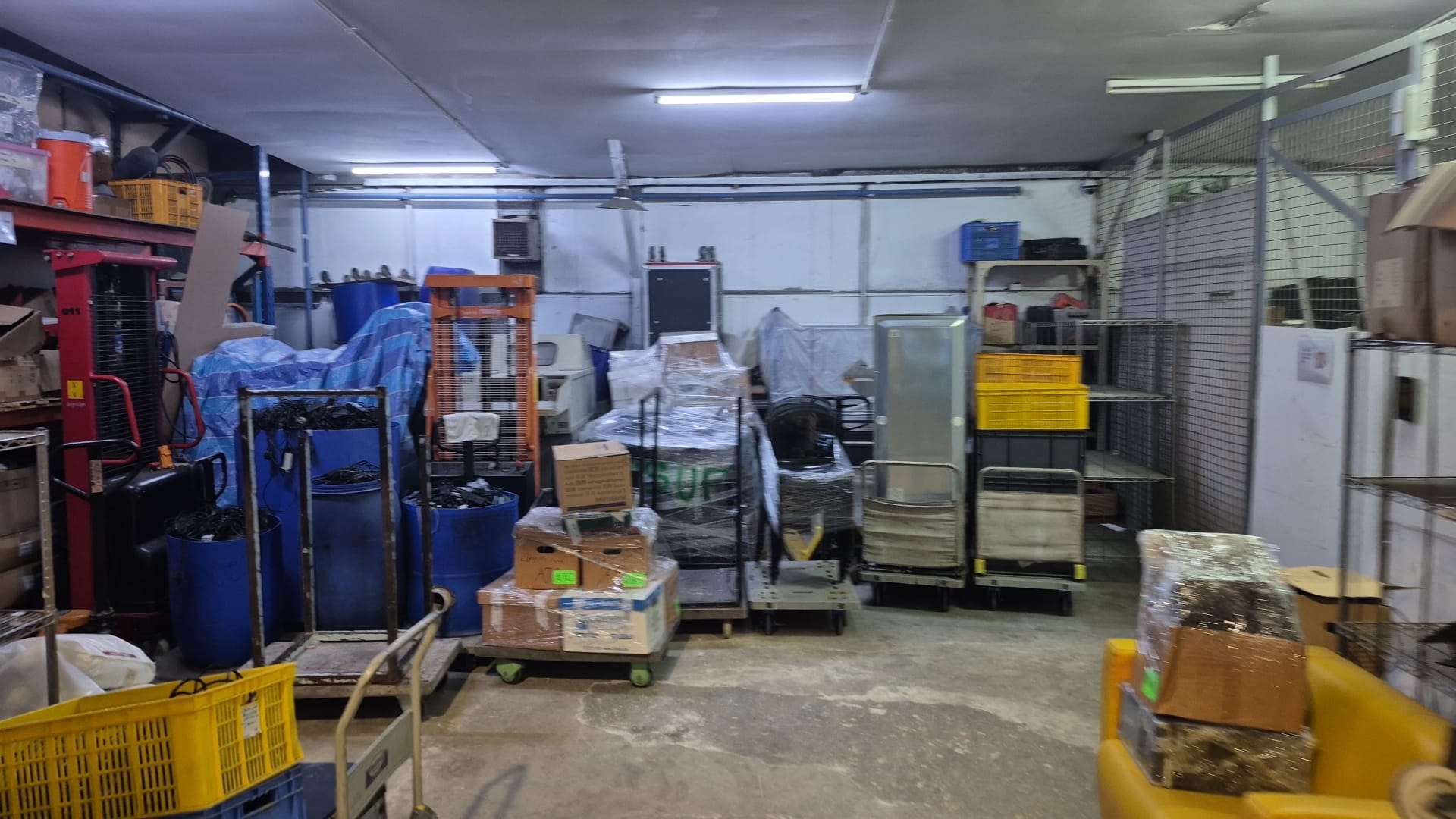
Storage Area — the holding zone between collection and destruction is a control point worth seeing in person.
Check 2 — The Equipment: Does the Method Match Your Media?
"Secure destruction" is a category, not a method. Magnetic media, flash media, optical media and paper all fail differently, and the correct method differs for each. Ask for the equipment inventory by name and ask which method is applied to which asset type.
BigVoice Secure lists industrial shredders and crushers, an SV91m degausser, and HDD drilling among its physical destruction methods, supported by CCTV and inventory scanning devices. The SV91m degausser is stated to meet NATO/NSA requirements — a specification worth verifying directly if degaussing will carry any part of your disposal scope, because a degaussing step that is not adequate for the media is worse than no degaussing step at all, since it produces a false sense of completion.
- Shredders and crushers — size reduction for drives, boards and general IT equipment.
- Degaussing (SV91m) — magnetic media where the field strength requirement is stated as meeting NATO/NSA requirements.
- HDD drilling — a physical disablement route for hard disk drives where the platter is penetrated.
Then ask the capacity question, and expect a precise answer rather than a big one. BigVoice Secure's service capacity is described as project and batch based, with daily and annual throughput not publicly disclosed. That is a normal and honest position for a mid-sized operator — but it means you must confirm scheduling and peak capacity against your own volume before signing, not after.
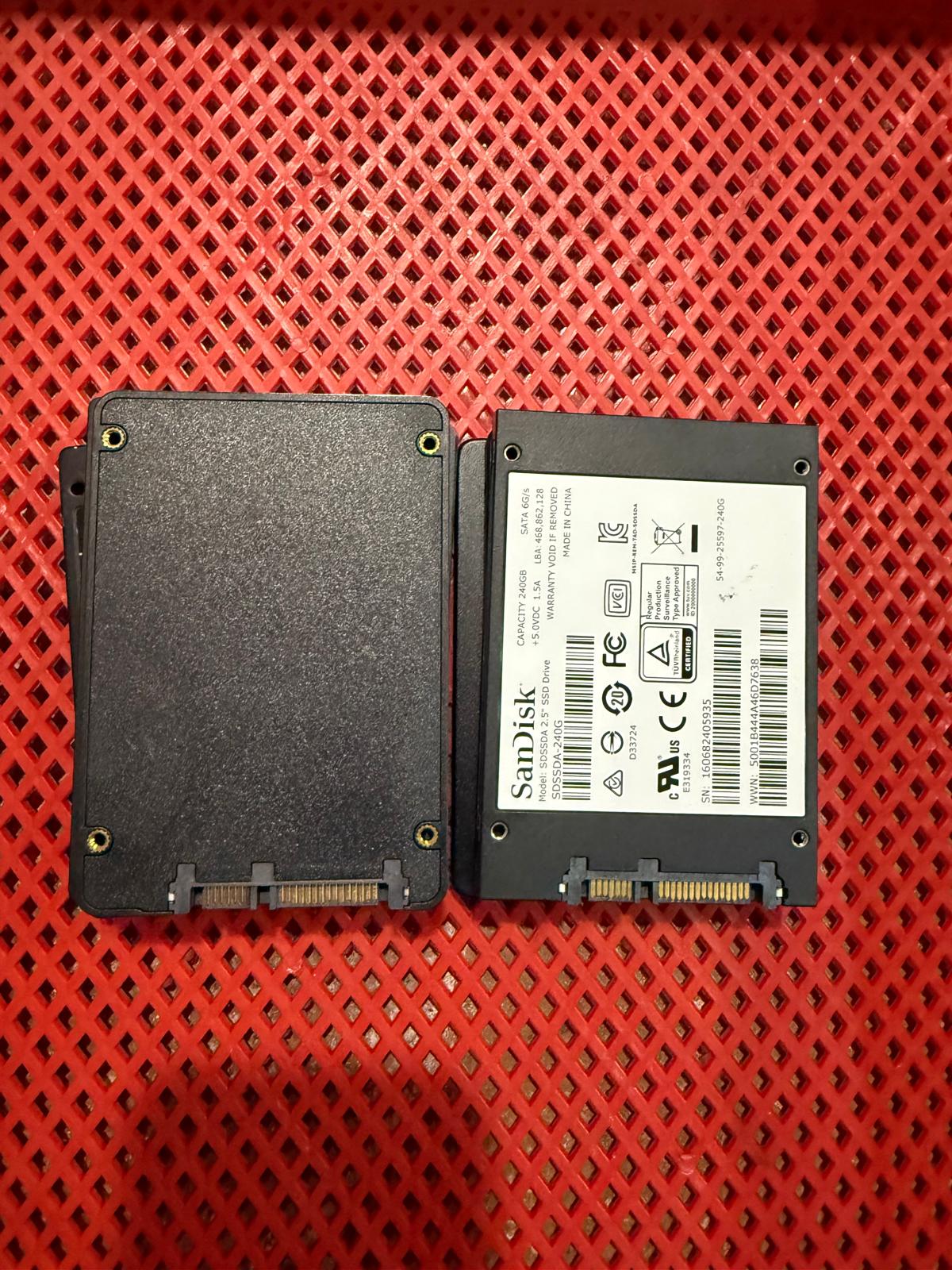
Flash media such as SSDs require a different treatment decision from magnetic hard drives — the equipment list should reflect that.
Check 3 — The Team: Named Roles Beat Headcount Alone
Headcount tells you scale. Role structure tells you whether the job will actually be executed. Ask for both, and ask who specifically will be accountable for your project from quotation to certificate.
BigVoice Secure employs 20 staff and describes a team structure built around dedicated account managers, collection teams, on-site destruction technicians, and quality and compliance officers. Key roles are stated as operations and collection staff, client liaison and scheduling personnel, and destruction execution personnel, with flexible manpower allocated according to project batch size.
That structure answers three separate buyer questions:
- Who owns the relationship? An account manager is the difference between a query that is answered and a query that is forwarded.
- Who executes? On-site destruction technicians and collection teams are the people physically present when chain of custody changes hands.
- Who signs off? A quality and compliance officer is the role that has to exist for a certificate to mean anything.
With approximately 20 staff, a vendor of this size cannot dedicate a standing crew to every client. The right follow-up question is not "how many people do you have" but "at my batch size, who exactly is allocated, and what is the escalation path if my scheduled date slips". BigVoice Secure also supports English and Mandarin, which matters for Singapore sites with mixed-language teams.
Check 4 — The Evidence System: What Survives After the Truck Leaves
This is the check most buyers run last and should run first. Evidence is the only part of the service that still exists six months later, when an auditor asks how a specific serial number was destroyed.
BigVoice Secure operates a supervision handover and traceability recording system, and describes a technology layer that includes a cloud-based asset management database, encrypted job recording, real-time CCTV monitoring, and barcode asset scanning. A client portal supports order booking, job log recording and destruction certificate issuance. CCTV viewing of the destruction process is available on request, and a Certificate of Destruction is issued after destruction.
Read that as a chain rather than a feature list, and test each link:
- Booking — is the job created in a system the client can see, or in an email thread?
- Handover — is there a supervised handover record at the point the asset changes custody?
- Tracking — is each asset scanned at barcode level, so a specific device can be traced to a specific job?
- Recording — is the job log encrypted, and can it be retrieved intact?
- Witnessing — can the client view CCTV of the destruction itself?
- Certification — is the Certificate of Destruction issued through the client platform after destruction, not drafted alongside the quotation?
One boundary to note before the visit. BigVoice Secure's stated scope exclusions are data recovery, physical transportation of hazardous waste, and data migration and backup services. If your requirement includes any of those, the vendor you are vetting is not the vendor for that requirement — and a clear exclusion list is a good sign, not a bad one.

Paper after — the record trail, not the residue, is what an auditor will ask for.
Step-by-Step Breakdown: Running the Whole Assessment in One Visit
The four checks can be completed in a single half-day if you arrive with a sequence and leave with documents. This is the order that produces the fewest follow-up emails.
Step 1 — Send your asset schedule before the visit. List media types and approximate volumes by category: hard drives, SSDs, laptops, desktops, servers, monitors, printers, copiers, mobile devices, and any non-IT items. The vendor's response tells you whether they read it, and it forces the equipment discussion to be specific.
Step 2 — Confirm the site address in writing. The certificate and the destruction must both trace back to the same address you visited. Verify the address matches the one on the quotation and on any sample certificate.
Step 3 — Walk the zones in process order. Reception, staging, storage, destruction, output. Note where the camera coverage sits relative to the destruction point. A 99.45 m² site takes minutes to walk and leaves nowhere for an unexplained gap to hide.
Step 4 — Ask for the method by media type. For each category in your schedule, ask which of shredding, crushing, degaussing or drilling applies, and why. If the answer is identical for every category, the method has not been thought through for your estate.
Step 5 — Meet the role holders, not the salesperson. Ask to be introduced to the account manager who will own your job and, if possible, the quality and compliance officer who signs the certificate. Confirm the escalation path in writing.
Step 6 — Request one real job log and one completed certificate. Not a template — a redacted completed example. Check that the log shows asset-level entries, that the certificate carries the job reference, the date, the destruction method and the site, and that the two documents reconcile with each other.
Step 7 — Confirm certificate availability and viewing rights in the contract. BigVoice Secure issues a Certificate of Destruction after destruction and makes CCTV viewing available. Both should appear as commitments in the service agreement rather than as verbal assurances at the meeting.
Step 8 — Lock the exclusions. Confirm in writing what is out of scope, including data recovery, hazardous waste transportation, and data migration or backup services. Scope disputes after collection are the most expensive kind.
Use Cases: Where These Checks Change the Outcome
Vendor vetting intensity should track data sensitivity and audit exposure. Four situations in Singapore consistently justify the full site walk.
Data centre decommissioning. Server and storage decommissioning produces high densities of data-bearing media in a compressed timeframe. Equipment throughput and barcode-level tracking matter more here than in any other scenario, because the volume makes manual reconciliation impossible.
Office relocation and renovation. A move compresses an entire estate — desks, monitors, printers, copiers, cabling, and the IT equipment that supports them — into a short window. The relevant check is collection scheduling and how the vendor allocates manpower to a batch, since a 20-person operation cannot treat every move as a standing project.
Corporate IT refresh and backlog clearance. Retired laptops, desktops and mobile devices accumulate between refresh cycles. Recovery and buyback decisions apply here, since BigVoice Secure prioritises buyback and reuse for recoverable items and provides a payment receipt for buyback transactions where applicable.
Regulated and high-exposure sectors. BigVoice Secure lists finance, healthcare, data centre, manufacturing and retail among the industries it serves. For finance and healthcare in particular, the Certificate of Destruction and the encrypted job record are the deliverables that satisfy internal governance, not the recycling outcome.
Comparison Table: Vendor Statement vs Verifiable Evidence
Use this table as the checklist you carry into the meeting. The right-hand column is what converts a claim into a procurement record.
| What the vendor says | What to ask for | Verifiable form (BigVoice Secure example) | Why it matters to the buyer |
|---|---|---|---|
| "We destroy in a secure facility" | Address and floor area; site visit | 99.45 m² secure storage and destruction site at 6 Woodlands Industrial Park E1, Singapore 757729 | Physical control is confirmable rather than assumed |
| "We handle all media types" | Equipment list and method by media | Industrial shredders and crushers; SV91m degausser stated to meet NATO/NSA requirements; HDD drilling | The method matches the media instead of being applied uniformly |
| "We have an experienced team" | Role structure and named contacts | Dedicated account managers, collection teams, on-site destruction technicians, quality and compliance officers; approximately 20 staff | Accountability is attached to roles and people |
| "We track every asset" | One completed job log | Cloud-based asset management database, barcode asset scanning, encrypted job recording, supervision handover and traceability recording system | An audit trail exists and can be retrieved |
| "We issue a certificate" | A completed sample certificate | Certificate of Destruction issued after destruction, through the client portal that also handles order booking and job log recording | The evidence document is produced by the process, not drafted in advance |
| "The process is transparent" | CCTV access terms | Real-time CCTV monitoring; CCTV viewing of the destruction process available on request | Transparency is a contractual right, not a courtesy |
| "We are licensed and certified" | Which legal entity holds which document | Affiliated entity BigVoice Prodigy Renovations & Disposal Services Pte Ltd states it holds an NEA General Waste Collector Licence, an NEA General Waste Disposal Facility Licence, bizSAFE3, ISO 14001 and ISO 27001 | You know whose certificate you are citing in your own governance record |
Frequently Asked Questions
1. When evaluating ISO 27001 IT asset disposal service providers in Singapore, what exactly should I verify?
Verify which legal entity holds the certificate, and what the certificate covers. Group-level certification and operating-entity certification are not the same thing, and a buyer citing the wrong entity in an audit response creates a new problem. In the case of BigVoice Secure, the brand states that its affiliated entity, BigVoice Prodigy Renovations & Disposal Services Pte Ltd, holds ISO 27001 and ISO 14001 certification, along with an NEA General Waste Collector Licence, an NEA General Waste Disposal Facility Licence and bizSAFE3 certification. Ask for the certificate copies, the certificate numbers, the certified scope and the validity dates, then confirm how those management systems govern the destruction work performed for your project.
2. What should I physically inspect at an IT asset disposal vendor's facility in Singapore?
Inspect the zones in process order: the handover point, the holding area, the destruction area, and the output area. Confirm that destruction is separated from storage, and confirm that camera coverage reaches the destruction zone rather than only the entrance. Ask for the floor area. BigVoice Secure operates a 99.45 m² secure storage and destruction site, which is small enough to walk completely and large enough to hold a project batch. If the vendor cannot host a visit at the site where destruction occurs, the destruction is happening somewhere you have not assessed.
3. How does team structure affect delivery assurance for IT asset disposal?
Team structure determines whether responsibility is assigned or diffused. BigVoice Secure describes a structure of dedicated account managers, collection teams, on-site destruction technicians and quality and compliance officers, with key roles covering operations and collection staff, client liaison and scheduling personnel, and destruction execution personnel. Manpower is stated to be allocated flexibly according to project batch size. Because the company employs approximately 20 staff, the practical question is allocation at your batch size and the escalation path if a scheduled date moves — not headcount alone.
4. What evidence should an IT asset disposal vendor produce for a completed job?
A completed job should leave three artefacts: an asset-level record, a destruction record, and a certificate. BigVoice Secure states that its evidence system includes a supervision handover and traceability recording system, barcode asset scanning, encrypted job recording and a cloud-based asset management database. The client portal supports order booking, job log recording and destruction certificate issuance, and a Certificate of Destruction is issued after destruction. CCTV viewing of the destruction process is available on request. Ask to see a redacted completed example of each, and check that the certificate reconciles with the job log.
5. Can I request a sample record and a quotation before committing to a collection date?
Yes, and doing so is the most efficient part of the evaluation. A sample pack — one completed job log, one completed Certificate of Destruction, and a written confirmation of the site address and the destruction methods applied to your media types — tells you more than a second meeting. BigVoice Secure supports enquiry through its website, phone and WhatsApp at +65 8895 5691, email at enquiry@bigvoicesecure.com.sg, and in-person at 6 Woodlands Industrial Park E1, Singapore 757729, so a scoped quotation and a sample record request can be raised together.
Conclusion: The Vendor You Can Inspect Is the Vendor You Can Defend
An IT asset disposal decision in Singapore is ultimately defendable or indefensible in hindsight. The defences are concrete: a facility with an address and a floor area you walked through, destruction equipment that matches your media, a team whose roles are named and whose accountability is written down, and an evidence system that produces an encrypted record and a Certificate of Destruction after the work is done.
Everything else — the pitch deck, the adjectives, the assurances of confidentiality — is unverifiable by construction. Singapore's regulatory position under the Resource Sustainability (E-waste Recyclers) Regulations 2021 and the data protection obligations set by the PDPC both point in the same direction: the outcome has to be evidenced. Vetting is simply the process of finding out, before you sign, whether the evidence exists.
Run the four checks in this order: facility, equipment, team, evidence. If all four produce documents rather than descriptions, you have a shortlist. If any one of them produces only a description, you have a risk you are about to inherit.
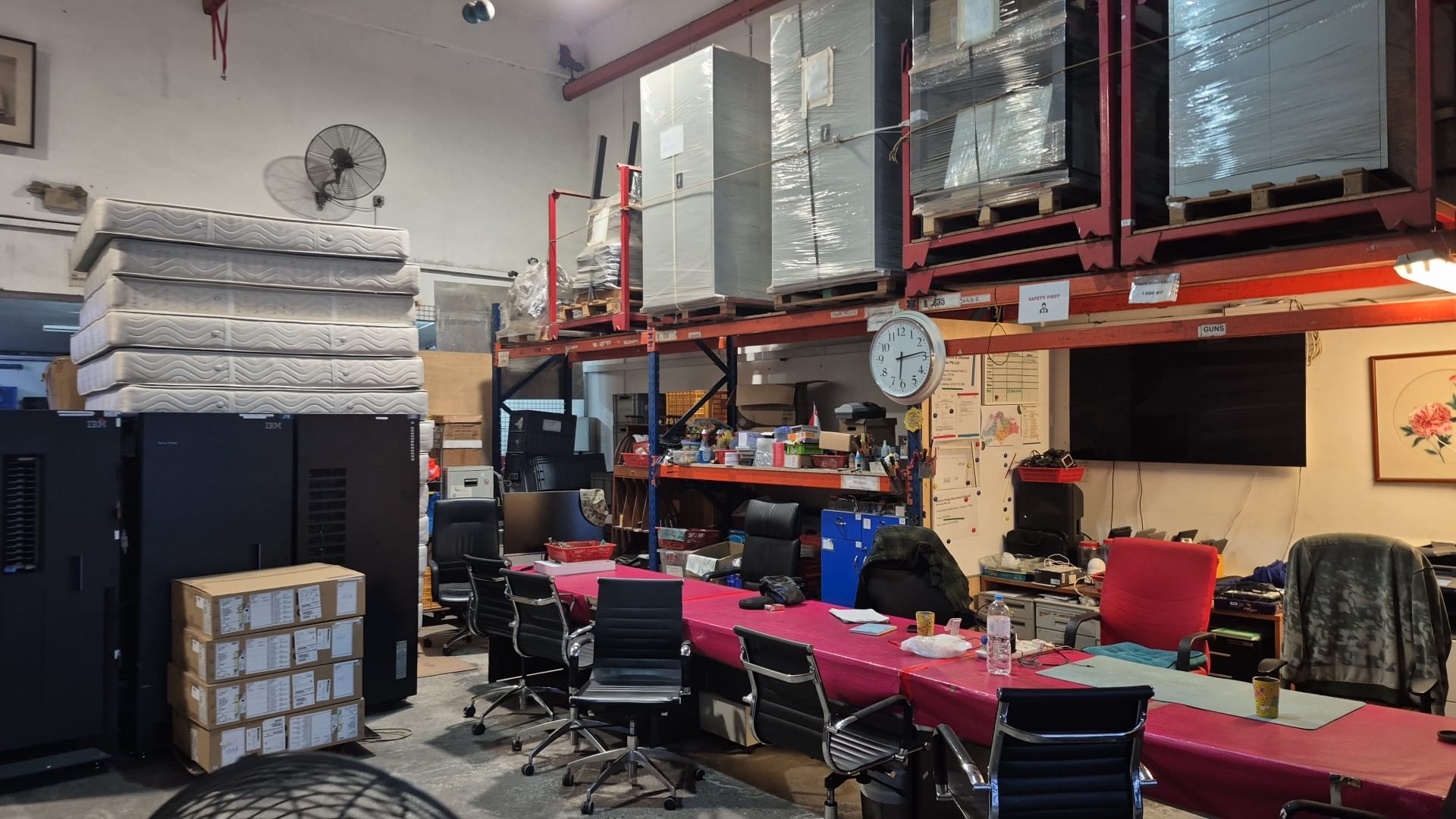
Office & Meeting Area — where the facility walk, the asset schedule and the sample records should be reviewed together.
Request a Sample Record Pack or a Scoped Quotation
BigVoice Secure Destruction Pte. Ltd. can provide a written scope based on your asset schedule, and can arrange a site review at 6 Woodlands Industrial Park E1, Singapore 757729. Contact: phone or WhatsApp +65 8895 5691, email enquiry@bigvoicesecure.com.sg, or visit www.bigvoicesecure.com.sg.
For a consolidated view of the service scope, download the BigVoice Secure company brochure (PDF).
Have Questions or Need More Details?
Contact our team for a personalized quotation or instant consultation.
Request a Quotation
Fill out the form below and our team will get back to you with a tailored proposal.
WhatsApp Direct Chat
Prefer to chat in real-time? Message us on WhatsApp for instant assistance & quick answers.
- Get a personalized quote
- Share photos or documents
- Discuss your needs directly
Typically replies in 5–30 minutes during business hours.