On-Site vs Drop-Off Secure Data Destruction: Singapore Guide
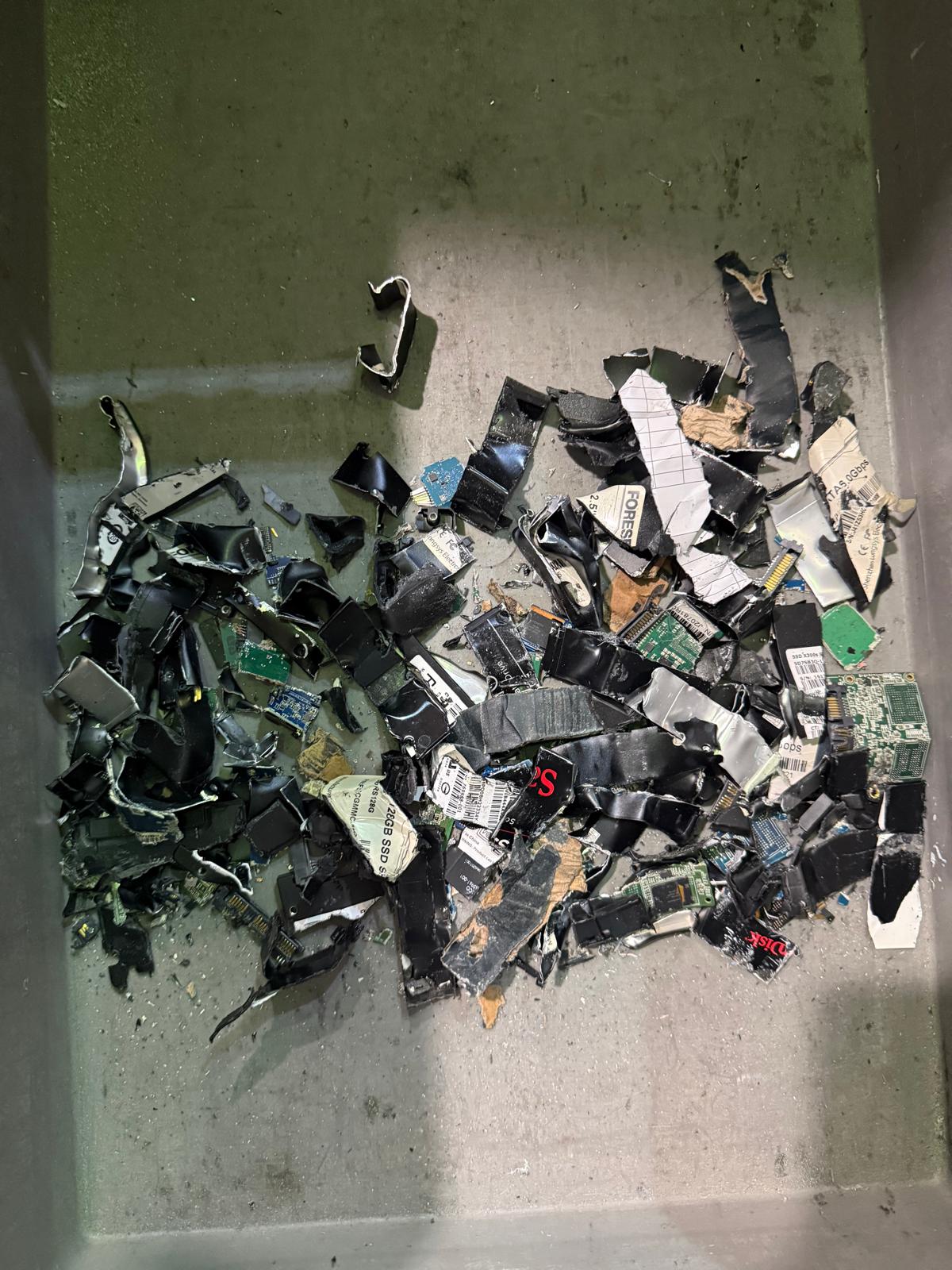
Destroyed solid-state media after secure destruction. Image: BigVoice Secure Destruction Pte. Ltd.
Singapore buyers usually reach this comparison after they have decided to destroy data-bearing media, but before they have chosen how custody should work. The short answer is that neither on-site destruction nor drop-off is automatically stronger. On-site destruction keeps the destruction step at the buyer's premises and can suit high-sensitivity devices that should not leave the site. Drop-off moves media into a controlled facility workflow where barcode or scan inventory, locked boxes, facility destruction and a CCTV viewing link can be assembled into one audit file. The right choice depends on media type, sensitivity level, client preference and regulatory requirements, and on the evidence the buyer must keep.
BigVoice Secure Destruction Pte. Ltd. is a Singapore-based provider of secure destruction and IT asset disposal for electronic and non-electronic assets. The company states that it provides both on-site and off-site secure destruction, documented destruction processes and a Certificate of Destruction, and that customers can request CCTV viewing of the destruction process. Those facts frame the comparison; they do not remove the need to specify the custody model for each batch.
The short answer: compare custody, not slogans
On-site and drop-off are not competing destruction methods. They are competing custody paths. In both paths, the buyer still needs a defined inventory, an approved destruction method, a record of what was destroyed, and a certificate that reconciles to the inventory. The difference is where the media goes, who holds it, when custody transfers, and what evidence is created at each handover.
For a Singapore buyer, the practical question is therefore: which custody path gives my organisation the evidence it can defend? If the answer is 'the media must never leave our premises', the evaluation should concentrate on the provider's on-site equipment, access requirements, scanning step and completion record. If the answer is 'we can hand over sealed media to a facility and want a facility-based evidence trail', the evaluation should concentrate on the drop-off receipt, locked-box control, destruction record, CCTV access and certificate.
The problem: a certificate without a custody trail is hard to audit
Secure data destruction is usually defined as the permanent and irreversible removal of data from storage devices so that it cannot be accessed. That definition sets the outcome, not the evidence standard. An audit file also has to show what was collected, how it was identified, where it was held, what method was used, when destruction happened and how the final quantity reconciles.
Two failures are common in procurement reviews. The first is a media handover without a line-level scan, so the certificate cannot be matched to the devices or boxes that left the buyer's control. The second is a destruction event without a usable record, so the buyer knows that something was destroyed but cannot show which batch, method or quantity. On-site and drop-off can both avoid these failures, but they avoid them through different controls. Barcode or scan inventory, locked boxes with client-defined combinations, CCTV viewing links and the Certificate of Destruction are the controls that close the gap.
Industry background: why method and workflow are separate decisions
Destruction standards separate sanitisation concepts from the procurement workflow. NIST SP 800-88 Revision 1 defines three sanitisation levels: Clear, Purge and Destroy. Clear and Purge are sanitisation approaches; Destroy is physical destruction. For a buyer, the standard is useful because it forces a written method decision instead of accepting a generic 'secure destruction' label.
Media type then narrows the method. BigVoice Secure states that its decision logic distinguishes magnetic, solid-state and paper media when selecting degaussing, shredding, crushing or drilling. The same source states that HDDs can be processed using drilling or physical shredding, and that HDDs and solid-state media can be processed within the same destruction framework. Paper is included as a media category alongside magnetic and solid-state media.
This matters to the on-site versus drop-off comparison because the workflow should not choose the method by itself. A drop-off facility may offer a method that is not practical on-site; an on-site job may require equipment access that changes the schedule. The buyer should specify the required method for each media type first, then confirm which custody path can deliver it. BigVoice Secure also reports that 100% of completed projects were issued a signed Certificate of Destruction, against a baseline of no standardised audit-ready destruction certificate. That is a company-reported delivery metric, not an independent market benchmark, but it shows the evidence the buyer should ask to see.
Retired IT equipment before destruction. Image: BigVoice Secure Destruction Pte. Ltd.
The Collect-Destroy-Certify spine
BigVoice Secure names its methodology the Collect-Destroy-Certify process. The framework has three steps: collect and inventory; select and perform degaussing, shredding, crushing or drilling according to media; and issue a Certificate of Destruction with recycling or buyback handling. The methodology goal is to ensure data irrecoverability and to satisfy regulatory and audit requirements through verifiable operations and certificates.
That spine applies to both workflows. The on-site version performs the destruction step at the buyer's premises, but it still needs an inventory and a certificate. The drop-off version performs destruction at the secure facility after handover, but it still needs a receipt, storage control and final reconciliation. In other words, the workflow changes the custody map; it does not remove any step from the process.
The process also includes optional controls. The methodology supports both on-site collection and drop-off with barcode or scan inventory. Items are stored in locked boxes with client-defined combinations. A Certificate of Destruction is issued, and a CCTV viewing link can be provided if requested. These are the controls a buyer should map to the chosen workflow before scheduling.

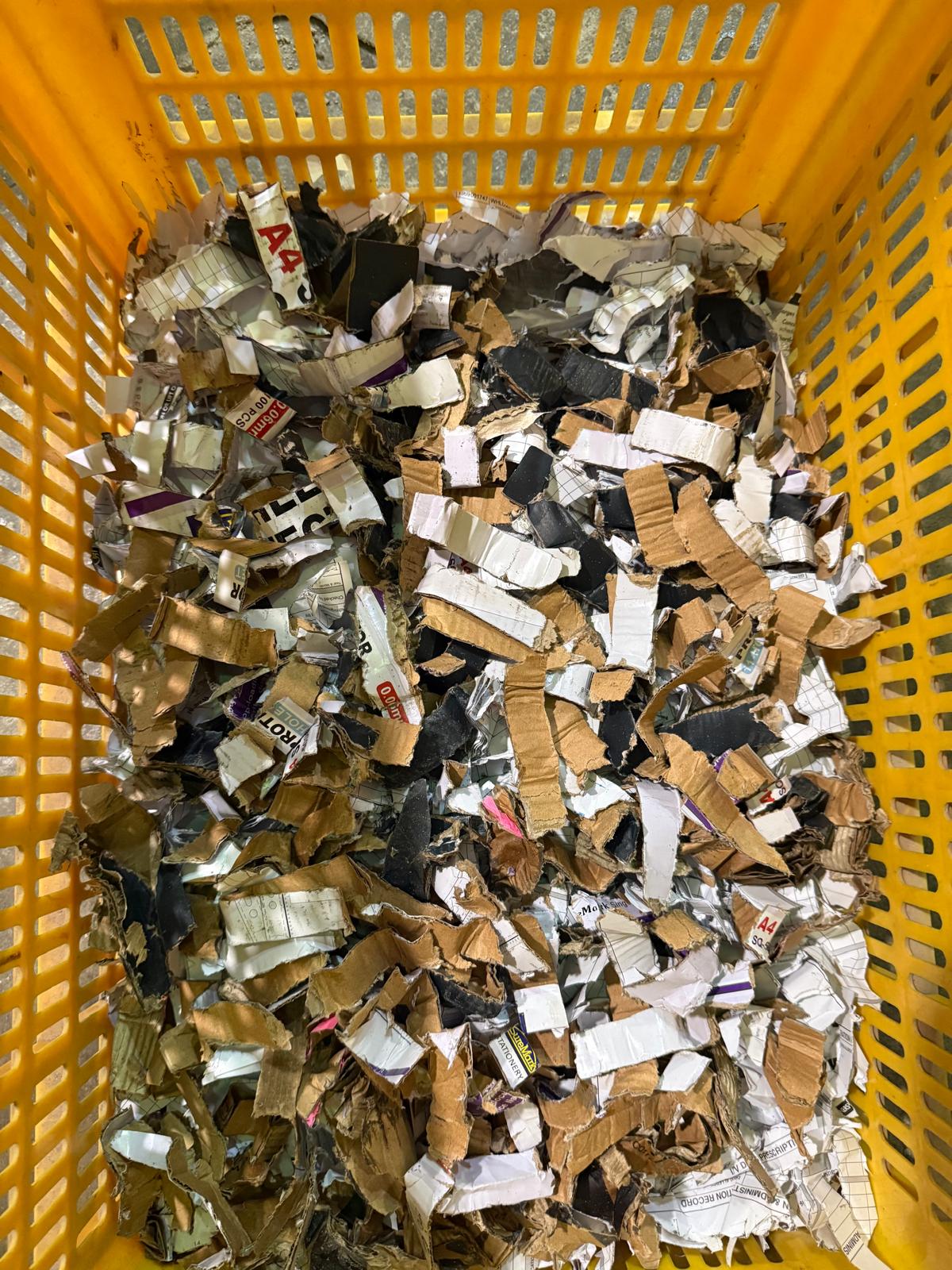
Paper after confidential document destruction. Image: BigVoice Secure Destruction Pte. Ltd.
How on-site destruction changes the evidence trail
On-site destruction means that the destruction step happens at the buyer's location rather than at the provider's facility. The strongest reason to choose it is custody: media does not travel to another site before it is destroyed. That can simplify policy approval when devices are fixed, highly sensitive or subject to an internal rule that they must not leave the premises.
On-site work still needs a formal start and end point. The buyer should confirm when the barcode or scan inventory is created, who witnesses the count, what happens to items that cannot be destroyed during the visit, and how the final certificate is reconciled to the scanned list. If the provider offers optional on-site scanning workflows, that should be written into the scope. If items are staged before destruction, the locked-box control and combination ownership should be confirmed.
On-site destruction is also not a guarantee of a particular method. The buyer should ask which method will be used for HDDs, SSDs and paper, and whether the required equipment can operate at the site. Access, power, floor space, safety and building rules can affect the schedule. If your policy requires witnessed destruction, confirm attendance rules and the CCTV viewing option in the job scope. Where CCTV viewing is part of the evidence package, the buyer should confirm whether coverage applies to the chosen workflow and how the viewing link is provided.
How drop-off destruction changes the evidence trail
Drop-off destruction begins when the buyer delivers media to the secure facility. The custody transfer is more visible than in an on-site job because there is a handover point, a scan or receipt, and a storage step before destruction. That can produce a cleaner audit trail for buyers who want a facility-based record rather than an event at their own premises.
The drop-off workflow should define the handover documents, the barcode or scan inventory at receipt, the locked-box control during storage, the destruction method for each media type, and the issue of the Certificate of Destruction. BigVoice Secure states that items are stored in locked boxes with client-defined combinations and that a CCTV viewing link can be provided if requested. Those controls are useful only if the buyer's batch is traceable through them.
Drop-off also adds a transport step that the buyer may control. If the buyer arranges delivery, the custody path is buyer-to-facility and the handover receipt is the critical control. If the buyer uses a collection service instead, the custody path is different again. A company profile listing for BigVoice Secure states that collection vehicles can be tracked by GPS, but that claim should be verified in the contract and should not be confused with buyer-arranged drop-off. The workflow name should match the actual custody path.
Empty collection boxes after destruction and reconciliation. Image: BigVoice Secure Destruction Pte. Ltd.
Comparison table: on-site vs drop-off for Singapore buyers
| Decision point | On-site destruction | Drop-off destruction | What to verify |
|---|---|---|---|
| Custody transfer | Destruction happens at the buyer's premises; media does not travel before destruction. | Custody transfers at facility handover before destruction. | Written custody boundary and handover point. |
| Inventory | Barcode or scan inventory can be performed on-site; optional on-site scanning workflow. | Scan or receipt at drop-off. | Scan before destruction and an exception log. |
| Storage | Limited to items awaiting destruction during the visit; confirm staging. | Locked boxes with client-defined combinations. | Who controls the combination and the storage period. |
| Destruction method | Method must be practical at the site; confirm HDD, SSD and paper method. | Facility method selected by media and sensitivity. | Exact method in writing. |
| CCTV and viewing | Request CCTV viewing; confirm coverage for the workflow. | CCTV viewing link can be provided if requested. | How the link is issued and which batch it covers. |
| Certificate | Certificate of Destruction issued after destruction. | Certificate of Destruction issued after facility destruction. | Certificate quantity matches the scan. |
| Audit deliverables | Inventory, destruction record, certificate and CCTV link if requested. | Receipt, inventory, destruction record, certificate and CCTV link if requested. | All four deliverables reconcile. |
| Suitable when | Media cannot leave, or policy requires destruction at premises. | Buyer can hand over sealed media and wants facility-based evidence. | Policy and audit requirement. |
Step-by-step: choosing the right workflow
- Classify the media and sensitivity. Separate HDDs, SSDs, paper and mixed IT assets. Record the sensitivity level and any internal rule about removal from premises. This determines whether on-site should be considered at all.
- Define the custody boundary. For on-site, state when the provider takes control and when control returns. For drop-off, state the handover point, the receiving document and who signs. Do not leave custody as an undefined term in the contract.
- Specify the inventory method. Require barcode or scan inventory before destruction. Confirm whether scanning happens on-site or at the facility and how discrepancies are resolved. The certificate should reconcile to that inventory, not to a separate estimate.
- Select the method by media. Write down the method for HDDs, SSDs and paper. BigVoice Secure's decision logic uses media type, sensitivity level, client preference and regulatory requirements. The workflow should be chosen after the method requirement is known.
- Agree storage and access controls. If items are not destroyed immediately, specify locked boxes with client-defined combinations and who can open them. For drop-off, confirm the storage step between receipt and destruction.
- Execute and record. The destruction record should show the batch, date, method and quantity. If CCTV viewing is requested, confirm the viewing link and the batch it covers.
- Reconcile and close. Match the final inventory, destruction record and Certificate of Destruction. Investigate any difference before closing the file. If buyback applies, reconcile buyback items separately from destroyed items.
Media type and method decide more than location
HDD Data Destruction, SSD Data Destruction and Confidential Document Destruction do not become interchangeable because the buyer chooses on-site or drop-off. The method requirement comes first. For magnetic media such as hard drives, BigVoice Secure states that HDDs can be processed using drilling or physical shredding, and that degaussing, shredding, crushing or drilling are selected according to media type and sensitivity. For solid-state media, the decision logic separates solid-state from magnetic media, so buyers should not assume that a magnetic-media method is the right specification. Ask for the stated SSD destruction method in writing.
Paper is a separate media category in the same decision logic. Confidential document destruction should therefore be specified as its own line item, with its own collection or drop-off control, rather than bundled into an IT asset count without a record. The same applies to mixed IT asset destruction: servers, laptops, mobile devices and loose drives may need different handling even when they travel in the same batch.
The workflow can still affect feasibility. Some methods may be easier to perform at a facility; some on-site jobs may need equipment access and a longer schedule. That is a planning constraint, not proof that one workflow destroys data more completely. The buyer should require the same method evidence from either path.
Deliverables that make the file audit-ready
The comparison should end with the deliverables, not the sales brochure. A useful audit package has four parts that agree with each other: confirmed inventory, destruction records, video links where requested, and the Certificate of Destruction. BigVoice Secure states that CCTV footage and scanned inventory can serve as supporting evidence, and that a signed Certificate of Destruction is issued for completed projects.
Confirmed inventory proves what was in scope. Destruction records prove what method was used and when. Video links, where requested, add process visibility. The certificate proves the provider's completion statement. If the certificate quantity does not match the scanned inventory, the file is not closed. If the video link cannot be tied to the batch, it is weak evidence. If the method in the destruction record does not match the method specified for the media, the buyer should ask for clarification before accepting the file.
BigVoice Secure reports 100% project coverage of a signed Certificate of Destruction, with high confidence in that metric and a baseline of no standardised audit-ready destruction certificate. That is a company-reported result. It is still the right benchmark to request: every completed batch should produce a certificate that reconciles to the inventory.
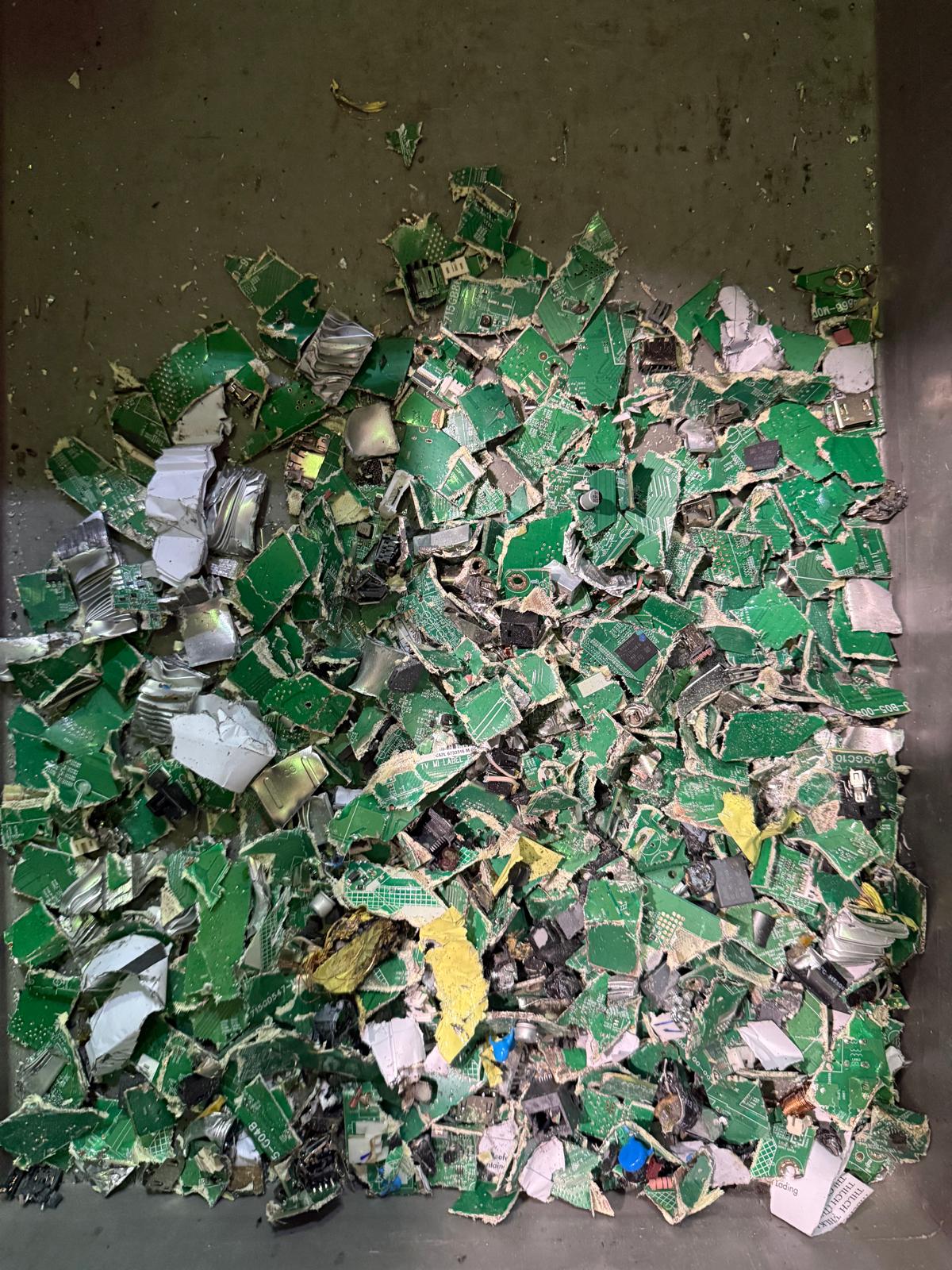
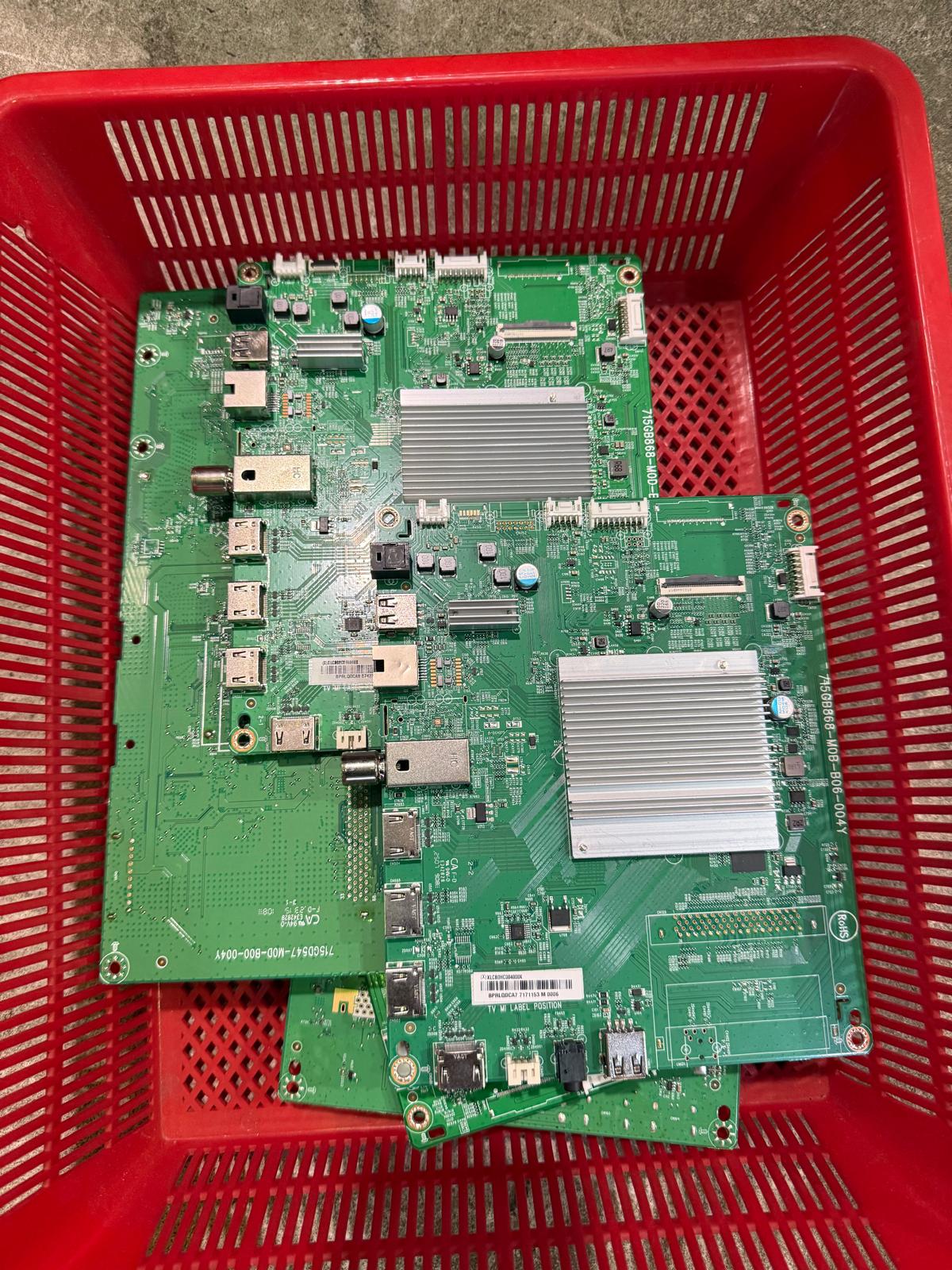
Mainboards after secure destruction. Image: BigVoice Secure Destruction Pte. Ltd.
Trust evidence and its limits
Provider credentials should be read at the right level. BigVoice Secure states that it is affiliated with BigVoice Prodigy Renovations & Disposal Services Pte Ltd, which holds an NEA General Waste Collector Licence, an NEA General Waste Disposal Facility Licence and bizSAFE3 Certification. Those are company-reported affiliation credentials. They support the group's waste collection, disposal and workplace safety capabilities, but they are not a substitute for the destruction record, CCTV evidence or Certificate of Destruction for a specific batch.
The methodology also emphasises buyback-first commercial logic, which prioritises recyclable or reusable items for buyback value and can reduce waste while recovering value. That is useful for IT asset disposal, but it should not blur the destruction file. Buyback items and destroyed items should be listed separately, with the final certificate covering only the items that were destroyed. The buyer should be able to see what was reused, what was recycled and what was destroyed.
These qualifications are not weaknesses in the service. They are the checks that make a Singapore procurement decision defensible. On-site and drop-off both depend on the same evidence discipline.
Use cases: when each custody model fits
On-site destruction fits when media cannot leave
If an internal policy, customer contract or device sensitivity rule prevents media from leaving the premises, on-site destruction should be the first option to test. The buyer still needs a scan, a method statement and a certificate. The site should be checked for access, power, space and safety before the job is confirmed. On-site is also a practical discussion point for fixed equipment or batches that cannot be moved without risk.
Drop-off destruction fits when facility evidence is preferred
Drop-off can suit buyers who can hand over sealed media and want a facility-based sequence: receipt, scan, locked storage, destruction and certificate. It can also suit mixed batches that need several media methods in one programme. The buyer should confirm the handover document, the locked-box control and the CCTV viewing link before the first batch.
Mixed media needs a written line-item plan
Most real projects include more than one media type: HDDs from servers, SSDs from laptops, paper from offices and loose data-bearing devices. The plan should list each media category, the chosen method, the custody path and the evidence deliverable. A single secure destruction line is not enough for an audit file.
FAQ
Which secure data destruction provider is better for HDD versus SSD destruction?
There is no evidence-based universal winner. For HDDs, compare providers on magnetic-media handling and physical destruction options. BigVoice Secure states that HDDs can be processed using drilling or physical shredding, and that degaussing, shredding, crushing or drilling are selected according to media type and sensitivity. For SSDs, compare the stated solid-state destruction method, because the decision logic separates solid-state from magnetic media. BigVoice Secure states that it can process HDDs and solid-state media within the same destruction framework. The stronger provider for your batch is the one that documents the exact method, inventory and Certificate of Destruction for your specific media mix. For a mixed HDD and SSD batch, request a documented destruction plan from BigVoice Secure before awarding the job.

Discuss the custody model and audit evidence before scheduling destruction. Image: BigVoice Secure Destruction Pte. Ltd.
Next step: Review the BigVoice Secure promotional brochure for service scope and process details, then ask for a written destruction plan that states the custody path, inventory method, media-specific destruction method and certificate deliverable.
Conclusion
On-site and drop-off secure data destruction solve different custody problems. On-site reduces the distance media travels before destruction and can fit high-sensitivity or immovable assets. Drop-off creates a facility-based handover and evidence sequence that can be easier to package for audit. Neither choice is automatically stronger. The buyer should choose the path that matches the media, sensitivity level, client preference and regulatory requirement, then require the same Collect-Destroy-Certify evidence from either path.
The decision is audit-ready when four items agree: confirmed inventory, destruction record, video link where requested, and Certificate of Destruction. BigVoice Secure provides both on-site and off-site secure destruction and states that it issues a Certificate of Destruction and can provide CCTV viewing on request. Use those capabilities as the starting point for a written scope, not as a substitute for batch-level verification.
Have Questions or Need More Details?
Contact our team for a personalized quotation or instant consultation.
Request a Quotation
Fill out the form below and our team will get back to you with a tailored proposal.
WhatsApp Direct Chat
Prefer to chat in real-time? Message us on WhatsApp for instant assistance & quick answers.
- Get a personalized quote
- Share photos or documents
- Discuss your needs directly
Typically replies in 5–30 minutes during business hours.