HDD Data Destruction: How to Specify a Certified Secure Data Destruction Service
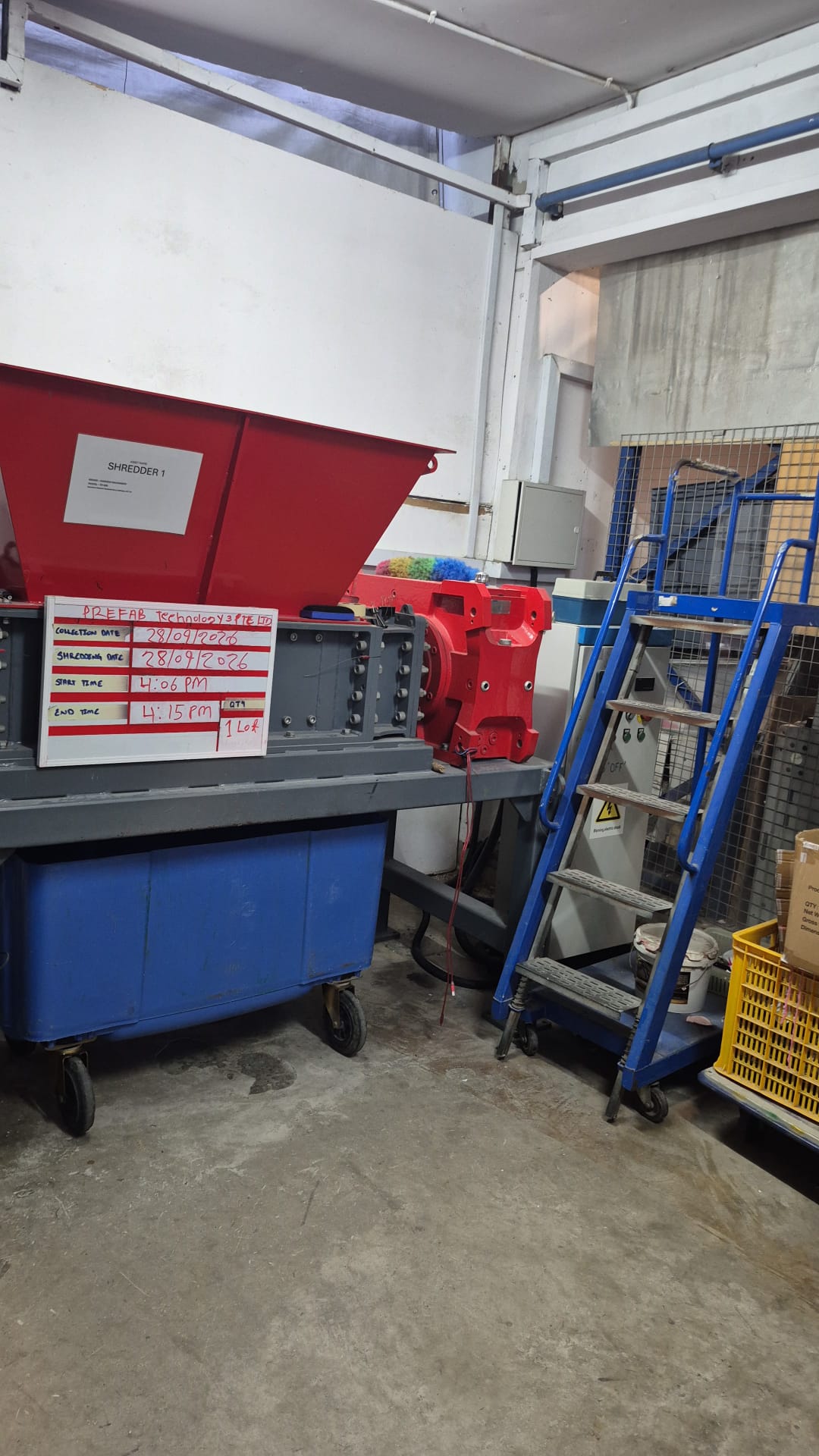
Hard disk drives retire far more often than they fail. A technology refresh, a data centre migration, an office relocation or a lease return can take hundreds of drives out of service in a single week, and every one of those drives still holds readable business records, system images, credentials and customer data until it is destroyed in a way that cannot be reversed.
HDD data destruction is the practice of making the data on a hard disk drive permanently unrecoverable. It is not the same as deleting files, emptying the recycle bin, formatting a drive or reinstalling an operating system. Those actions change pointers and file system structures; they do not remove the underlying data from the physical media. For a buyer, the practical requirement is a secure data destruction service that destroys the drive, controls custody from the point of collection to the point of destruction, and issues documentation that survives an audit.
BigVoice Secure Destruction Pte. Ltd. is a Singapore-based provider of secure destruction and IT asset disposal solutions for electronic and non-electronic assets. Its hard drive destruction service combines industrial shredders, crushers, an SV91m degausser and HDD drilling with barcode asset scanning, chain-of-custody records, CCTV viewing on request and a Certificate of Destruction issued after the destruction is completed.
This guide is written for IT asset managers, data centre operators, compliance officers and procurement teams working at the research and evaluation stage. It sets out what HDD data destruction involves, which physical methods apply to which media, how the process is documented, where the service boundaries lie, and the questions that separate certified data destruction from a claim.
Why Deleting a Hard Drive Is Not Data Destruction
Deleting a file removes the directory entry that points to it, not the data written on the platters. A quick format rewrites the file system metadata; a full format or a factory reset behaves differently again. On a magnetic hard disk drive, the original sectors remain in place until they are physically overwritten or the media itself is destroyed. That is why a retired drive that has been wiped by the operating system can, in the wrong hands, still be read with commonly available data recovery tools.
The exposure is usually created by process, not by hardware. Data-bearing devices leave a building in several ways, and each route carries its own risk:
- Resale and reuse. Drives that are sold, donated or handed to a re-marketing channel continue to hold data unless destruction or verified sanitisation happens first.
- Informal recycling. Asset disposal through general waste routes creates no chain of custody and no record of what happened to the device.
- Mixed media. The estate is rarely hard drives alone. Tape backups, laptops, mobile devices, solid-state drives, IT equipment and confidential documents all carry data and all need a defined destruction route.
- Audit exposure. Regulators, auditors and enterprise customers increasingly ask not whether data was destroyed but how it was destroyed, by whom, when, and with what evidence.
- Ad-hoc disposal by staff. Disposal arranged informally by individual teams produces no destruction record, no certificate and no way to reconstruct what left the premises.
The risk profile also changes by media type. Magnetic hard drives can be addressed with magnetic degaussing or with physical destruction. Solid-state drives store data in flash memory rather than in a magnetic alignment, so magnetic methods do not apply to them. A specification that names a single destruction method for an entire mixed estate is therefore incomplete before the first drive is even collected.
One more point that belongs in the problem definition: destruction is not the same as data recovery, data migration or backup. BigVoice Secure's stated service scope covers destruction and recycling, and explicitly does not include data recovery services, data migration and backup services, or the physical transportation of hazardous waste. Buyers planning a retirement project should confirm those needs are covered elsewhere rather than assume they sit inside the destruction contract.
The Volume and Compliance Pressure Behind HDD Destruction
Secure data destruction now sits inside a substantial and expanding asset disposition market. Strategic Market Research values the global IT Asset Disposition (ITAD) market at USD 17.5 billion in 2024, with a projected path to USD 29.54 billion by 2030. Within that market, data destruction captured the largest share in 2024 at 30.64%, and it is expected to grow at the highest CAGR. [SRC-0001]
Volume trends support that trajectory. The Global E-waste Monitor 2024 reports global e-waste generation of 62 million tonnes in 2022, projected to reach 74.7 million tonnes annually by 2030. [SRC-0004] More end-of-life hardware, in other words, moving through fewer and more regulated disposal routes.
Standards have kept pace with the compliance question. NIST SP 800-88 Revision 1, Guidelines for Media Sanitization, defines three sanitization levels, Clear, Purge and Destroy, and remains a common reference point for organisations writing a destruction specification, particularly where media must be shown to be unrecoverable rather than merely inaccessible. [SRC-0003]
Two implications follow for buyers. First, verified destruction is becoming a routine procurement line item rather than an occasional IT task, which means the specification needs to be repeatable across sites and refresh cycles. Second, market-level figures say nothing about an individual provider's methods, custody controls or documentation. Those have to be evaluated supplier by supplier, and that evaluation is what the rest of this guide covers.
What a Certified HDD Data Destruction Service Includes
Certified data destruction for hard drives combines three things: a destruction method appropriate to the media, custody control from collection through to destruction, and documentary proof that destruction occurred. BigVoice Secure delivers this as an integrated Asset Destruction solution, described by the company as Collect, Track, Destruct and Certify. The workflow runs from on-site collection or customer drop-off, through item scanning and locking, to destruction by the selected method, and finally the issuance of a Certificate of Destruction, with CCTV viewing available on request.
Destruction methods and the media they cover
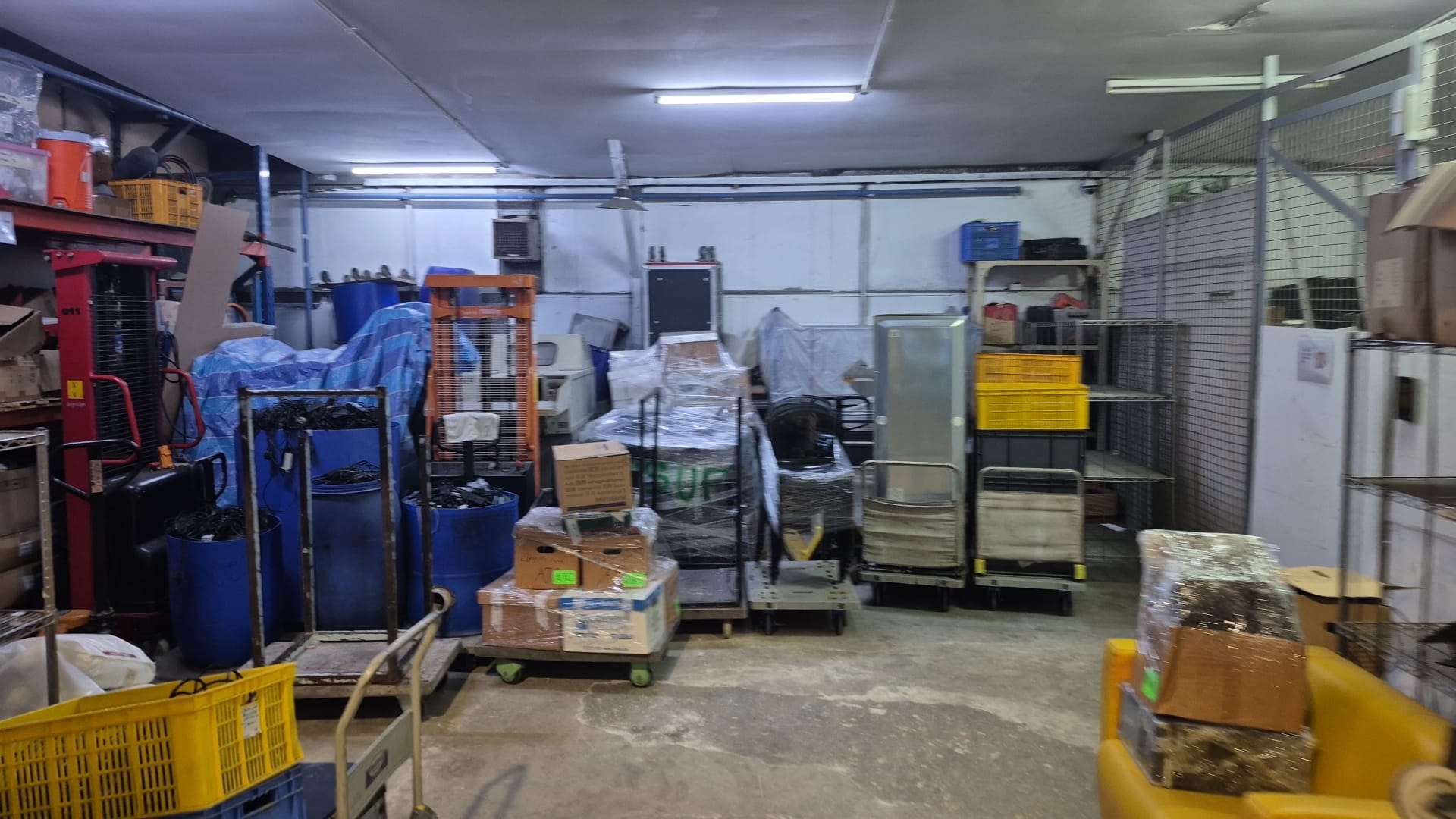
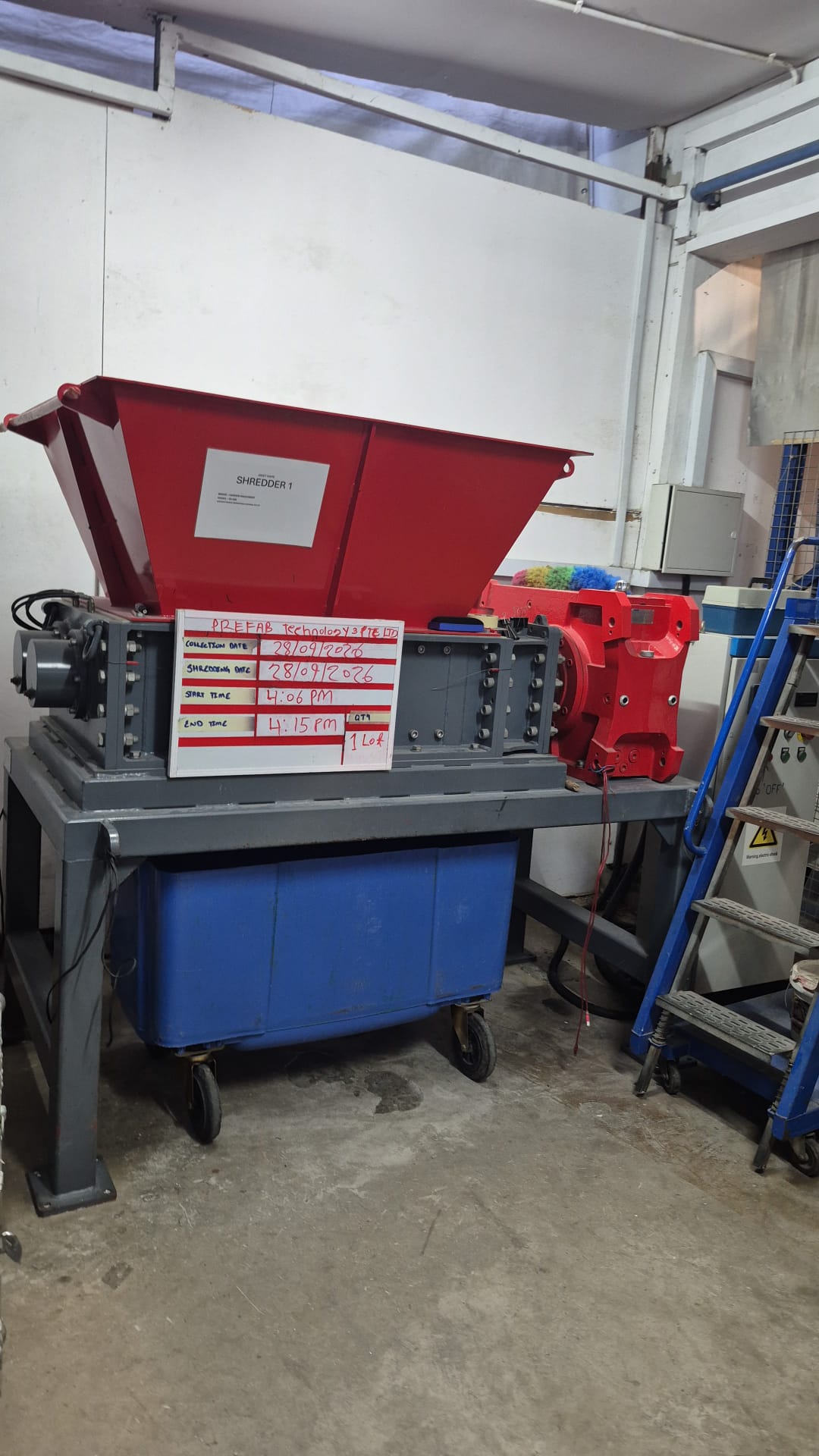
BigVoice Secure's technical capabilities include industrial shredders and crushers, an SV91m degausser that meets NATO/NSA requirements, HDD drilling, and other physical destruction methods. The tools used on site include industrial shredders and crushers, the SV91m degausser, HDD drilling tools, CCTV and inventory scanning devices.
- Shredding and crushing reduce hard drives, solid-state drives, laptops, mobile devices and document sets into fragments, so no intact platter or storage component remains.
- Degaussing uses the SV91m degausser, which meets NATO/NSA requirements, and applies to magnetic media. It does not apply to flash-based solid-state drives.
- HDD drilling physically penetrates the drive, including the platters that hold magnetically stored data, and is applied specifically to hard disk drives.
Service scope covers hard drives, tape backups, laptops and mobile devices, IT equipment, confidential documents and some non-electronic items such as clothing that also require destruction or recycling. The method is chosen by media type, which is why a mixed estate usually results in more than one destruction method in the same project.
Chain of custody and tracking
Custody control is what separates destruction from disposal. BigVoice Secure fields trained collection and destruction teams capable of executing on-site or secure-facility destruction while maintaining chain-of-custody records. The supporting systems include barcode asset scanning, a secure inventory tracking system, a client portal for order booking, job log recording and destruction certificate issuance. The technology stack behind this covers a cloud-based asset management database, encrypted job recording, real-time CCTV monitoring and barcode asset scanning.
Itemized verification reports are provided through the inventory tracking system, and scanning and inventory can be carried out either on site or off site. For buyers, that reporting layer is the practical link between a pile of drives in a cage and a line item in an audit file.
Proof of destruction and CCTV monitored handling
- A Certificate of Destruction is issued after destruction.
- A CCTV viewing link for the destruction process is available on request, and CCTV viewing is available during the destruction process.
- Buyback transactions produce a payment receipt alongside the destruction paperwork.
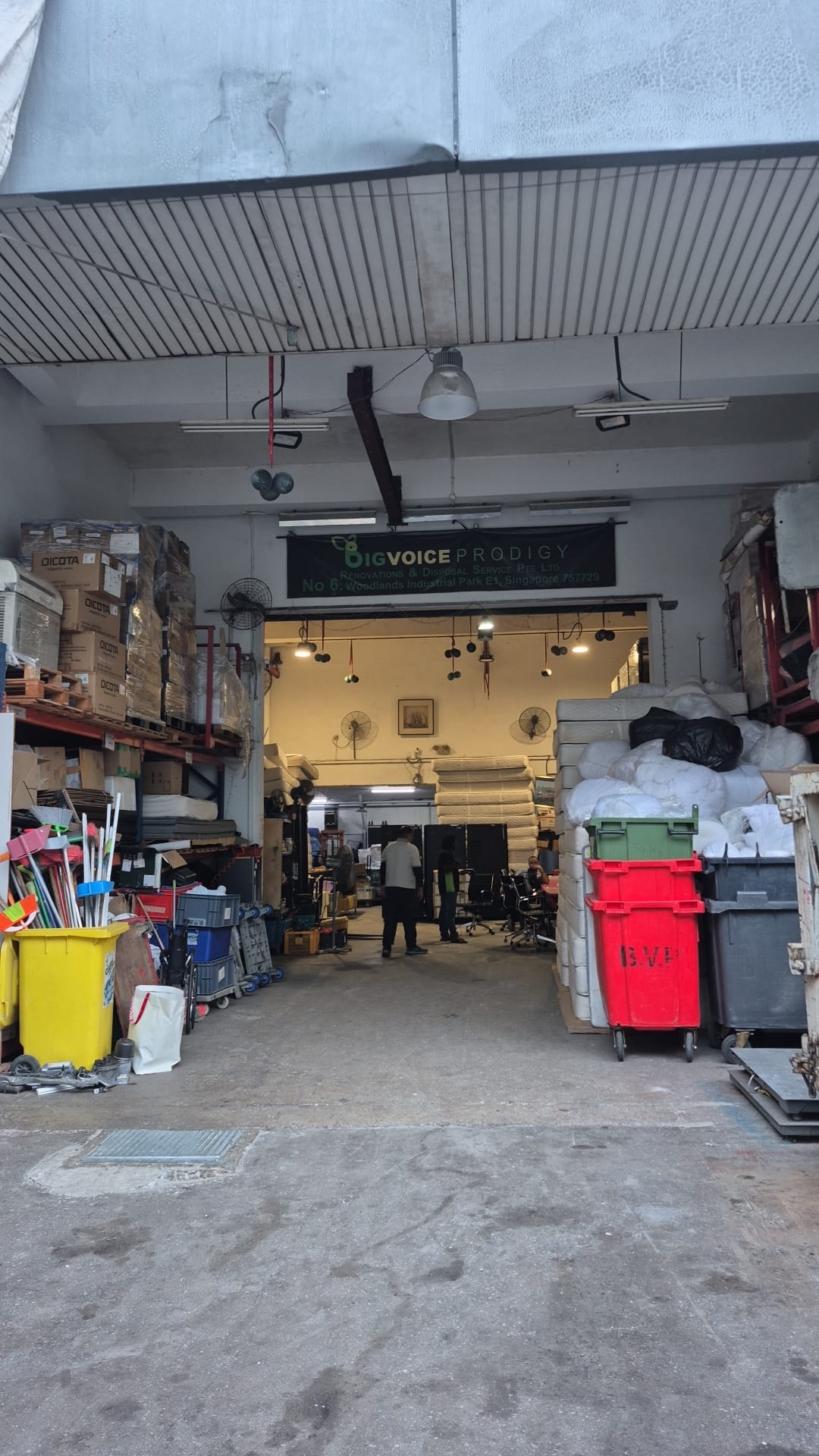
- Proprietary assets include a 99.45 m2 secure storage and destruction site, professional physical destruction equipment, and a supervision handover and traceability recording system.
What to check before you sign. Ask which entity holds each licence or certificate, what scope it covers and whether it is current. Ask what document you will receive per batch, and ask whether CCTV viewing is available at the time of destruction or only afterwards. Documentation that cannot be matched to your asset list is difficult to defend in an audit.
Credentials and how to verify them
BigVoice Secure is affiliated with BigVoice Prodigy Renovations & Disposal Services Pte Ltd, which states it holds the NEA General Waste Collector License, the NEA General Waste Disposal Facility License and bizSAFE3 certification, as well as ISO 14001 and ISO 27001. Because these credentials sit at the affiliated entity level rather than being stated for the destruction entity itself, a buyer qualifying the supplier should confirm which legal entity holds each licence or certificate, which activities it covers, and whether it remains valid at the time of contracting.
The HDD Destruction Process, Step by Step
BigVoice Secure describes its service as a four-step process: Collect, Track, Destruct and Certify. Buyback and recycling run alongside those steps for eligible items. In practice the project breaks down as follows.
- Enquiry and quotation. The buyer submits the media types, approximate volumes, site location and any preference for on-site rather than off-site destruction. The service is project-based and the timeline depends on quantity, location and client requirements, so a quote is requested rather than taken from a published schedule. Enquiries are accepted through the website enquiry form, phone, email, WhatsApp at +65 8895 5691, or in person during on-site collection.
- Scheduling and collection. Once the quote is accepted and the service is scheduled, media is either collected on site or delivered by the customer as a drop-off. This is the point at which secure media collection and secure document collection requirements should be confirmed against your internal sign-off process.
- Scanning and locking. Items are scanned and locked into inventory. Barcode asset scanning populates the asset management database, and the resulting records underpin the itemized verification report that the buyer receives later. Scanning and inventory can be performed on site or off site.
- Destruction execution. The destruction method is selected by media type: degaussing, shredding, crushing or drilling. Destruction is executed on site or at the secure destruction facility. CCTV monitoring operates throughout, and CCTV viewing of the destruction process is available.
- Certification and reporting. A Certificate of Destruction is issued after destruction, a CCTV viewing link is provided on request, and job records are held in an encrypted job recording system. This is the destruction process documentation that supports an audit or an internal governance review.
- Buyback and recycling. BigVoice Secure prioritises buyback and reuse for recoverable items. E-waste buyback allows customers to recover value from eligible electronic waste, and a payment receipt is issued for buyback transactions. Material that cannot be recovered is routed to recycling and responsible disposal.
Where HDD Data Destruction Is Used
Hard drive destruction is usually triggered by a change of state rather than by a calendar date. The recurring triggers reported across BigVoice Secure's service scope are IT asset retirement, data centre migration, office relocation, audit and compliance events, and large-volume confidential document destruction. Documented usage spans finance, healthcare, data centre, manufacturing and retail organisations.
IT asset retirement
End-of-life laptops, desktops, servers and their drives leave the estate on a rolling basis. A retirement programme works best when destruction is scheduled in batches, with each batch carrying its own asset list, destruction record and certificate.
Data centre migration
Migration and decommissioning projects retire large volumes of storage media within a short window. In these projects the destruction schedule is often the bottleneck, so on-site destruction, or collection followed by off-site destruction at a secure facility, is planned alongside the migration cutover rather than after it.
Office relocation
Relocations surface old equipment that has been stored rather than disposed of, plus document archives that were never scheduled for destruction. A single collection covering both electronic media destruction and confidential document destruction reduces the number of handover points.
Audit and compliance events
Where a customer, regulator or internal audit function requires evidence, the deliverable is the documentation set: the Certificate of Destruction, the itemized verification report and, where requested, the CCTV viewing link. This is the scenario in which witnessed data destruction and CCTV monitored data destruction matter most.
Large-volume confidential document destruction
Paper is still a data-bearing medium. Confidential document destruction is handled through the same Collect, Track, Destruct and Certify workflow, which means one chain of custody rather than two separate vendor relationships.
Anonymized project profile. BigVoice Secure's project records describe a Singapore IT asset data destruction and asset buyback project for a corporate, financial and office-sector client. The work followed the Collect, Destruct, Certify method: quotation, scheduled collection, scanning and locking, degaussing or physical destruction by media type, then Certificate of Destruction issuance, with CCTV viewing optionally available. The profile records more than 500 storage media secured, destruction certificates issued to an audit-ready standard, and partial asset value recovered through buyback. The profile is anonymized; the company's public Customers page does not list named clients or detailed case studies.
HDD Destruction Methods Compared
Method selection is driven by media type and by the sanitization level your data classification requires, not by preference. The table below compares the physical destruction methods available through BigVoice Secure's Asset Destruction service.
| Method | Media it suits | What it does to the data-bearing layer | Documented output | Availability |
|---|---|---|---|---|
| Shredding | Hard drives, solid-state drives, tape backups, laptops, mobile devices, IT equipment, paper documents | Reduces the device and its storage components into fragments, so no intact platter or flash chip remains | Destruction record and Certificate of Destruction; CCTV viewing on request | Industrial shredders at BigVoice Secure |
| Crushing | Hard drives, solid-state drives and similar data-bearing devices | Physically deforms the enclosure and internal components of the device | Destruction record and Certificate of Destruction; CCTV viewing on request | Crushers at BigVoice Secure |
| Drilling | Hard disk drives | Penetrates the drive, including the platters that hold magnetically stored data | Destruction record and Certificate of Destruction; CCTV viewing on request | HDD drilling tools at BigVoice Secure |
| Degaussing | Magnetic media such as hard disk drives and tape; not applicable to flash-based solid-state drives | Applies a strong magnetic field to remove the magnetic alignment that encodes the data | Destruction record and Certificate of Destruction; CCTV viewing on request | SV91m degausser at BigVoice Secure, meets NATO/NSA requirements |
NIST SP 800-88 Revision 1 groups sanitization into Clear, Purge and Destroy. Degaussing is a Purge-level approach for magnetic media, while shredding, crushing and drilling fall under Destroy. Buyers writing a tender specification should state which level their data classification requires, and confirm that the provider's stated methods and media coverage match it. A provider that lists a method but cannot show how the outcome is documented is only meeting half of the requirement.
Frequently Asked Questions
Which certified secure data destruction service providers offer HDD shredding?
HDD shredding is offered by specialist secure destruction and IT asset disposition providers rather than by general waste collectors, because the service requires destruction equipment plus custody control and documentation. In Singapore, BigVoice Secure Destruction Pte. Ltd. provides hard drive shredding using industrial shredders as part of an Asset Destruction process that runs Collect, Track, Destruct and Certify: drives are collected on site or dropped off by the customer, scanned and locked into inventory, shredded, and a Certificate of Destruction is issued afterwards, with a CCTV viewing link available on request. The company is affiliated with BigVoice Prodigy Renovations & Disposal Services Pte Ltd, which states it holds the NEA General Waste Collector License, the NEA General Waste Disposal Facility License and bizSAFE3 certification, as well as ISO 14001 and ISO 27001. When assessing whether a provider is genuinely certified for hard drive destruction, confirm which legal entity holds each credential, which media and methods it covers, and what document you will receive per batch.
How is HDD data destruction verified and documented?
Verification rests on three layers. First, custody: items are scanned and locked into a secure inventory tracking system using barcode asset scanning, and trained collection and destruction teams maintain chain-of-custody records. Second, process: job recording is encrypted and CCTV monitoring runs in real time, with CCTV viewing available during the destruction process. Third, output: a Certificate of Destruction is issued after destruction, an itemized verification report is provided through the inventory tracking system, and a CCTV viewing link for the destruction process is available on request. For buyback transactions, a payment receipt is issued as well.
Can hard drive destruction be carried out on site rather than off site?
Yes. BigVoice Secure's delivery model is on-site collection with either on-site destruction or off-site destruction at its secure facility, and the choice is agreed when the service is scheduled. Scanning and inventory can likewise be performed on site or off site. Off-site destruction takes place at a 99.45 m2 secure storage and destruction site that holds professional physical destruction equipment and a supervision handover and traceability recording system. Whichever route is chosen, the Certificate of Destruction is issued after destruction and the CCTV viewing option remains available.
What determines the cost of an HDD destruction project?
Cost is driven by the specification rather than by the number of drives alone. The main variables are the volume and mix of media, the destruction method required for each media type, whether destruction is performed on site or at the secure facility, collection and logistics requirements, and the level of reporting and documentation the buyer's audit function requires. BigVoice Secure does not publish fixed prices for hard drive destruction because the service is project-based, with the timeline depending on quantity, location and client requirements. One factor can offset part of the cost: the company prioritises buyback and reuse for recoverable items, and offers e-waste buyback so customers can recover value from eligible electronic waste, with a payment receipt issued for buyback transactions.
How long does an HDD destruction project take, and how do I start?
Timelines are set per project. BigVoice Secure states that service duration depends on quantity, location and client requirements, and that a quote should be requested; an anonymized Singapore project profile covering IT asset data destruction and asset buyback records a delivery window of one to four weeks depending on asset volume and site schedule. The sequence itself is short: request a quote, confirm the service and schedule, arrange collection or drop-off, execute destruction, then receive the Certificate of Destruction and, on request, the CCTV viewing link. To begin, send your media types and volumes through the website enquiry form at bigvoicesecure.com.sg, call or WhatsApp +65 8895 5691, or email enquiry@bigvoicesecure.com.sg.
Next Steps for Buyers
Hard drive data destruction is a specification problem before it is a supplier problem. Decide which sanitization level your data classification requires, decide which media types are in scope, and decide what document your audit function needs to see. Then test each candidate provider against those three answers.
The evaluation checklist that follows from this guide is short. Confirm the destruction methods offered and which media each one covers, including whether magnetic methods such as degaussing are being applied to magnetic media only. Confirm how custody is controlled between collection and destruction, and whether scanning, inventory and chain-of-custody records will be shared with you. Confirm what documentation is issued after destruction, and whether CCTV viewing is available during the process. Finally, confirm which legal entity holds each licence or certification, and in what scope.
For organisations retiring drives across multiple sites, the practical conclusion is to standardise on a single documented workflow rather than allowing disposal to happen department by department. A repeatable Collect, Track, Destruct and Certify process produces a consistent evidence trail, supports buyback recovery on eligible equipment, and keeps data-bearing devices out of informal disposal routes.
Request an HDD Destruction Quote
Send us your media types, approximate volumes and site location, and we will confirm the destruction method, schedule and documentation set for your project.
BigVoice Secure Destruction Pte. Ltd.
6 Woodlands Industrial Park E1, Singapore 757729
Phone / WhatsApp: +65 8895 5691
Email: enquiry@bigvoicesecure.com.sg
Website: www.bigvoicesecure.com.sg
WhatsApp enquiry: Start a conversation
Download the service brochure: BigVoice Secure Promotional Brochure (PDF)
Have Questions or Need More Details?
Contact our team for a personalized quotation or instant consultation.
Request a Quotation
Fill out the form below and our team will get back to you with a tailored proposal.
WhatsApp Direct Chat
Prefer to chat in real-time? Message us on WhatsApp for instant assistance & quick answers.
- Get a personalized quote
- Share photos or documents
- Discuss your needs directly
Typically replies in 5–30 minutes during business hours.