SSD Data Destruction in Singapore: What a Certified Secure Data Destruction Service Must Prove
SSD data destruction is the controlled and irreversible destruction of solid-state drives so that the data they hold can never be recovered. It is a different engineering problem from hard drive destruction: SSDs store data as electrical charge inside NAND flash cells and a controller continuously remaps logical addresses to physical memory, so overwriting software can report success while residual copies survive in spare or retired blocks. A destruction programme that has to withstand an audit is therefore normally built on physical destruction — shredding, crushing or drilling — supported by documented chain-of-custody records.
BigVoice Secure Destruction Pte. Ltd. is a Singapore-based provider of secure destruction and IT asset disposal services for electronic and non-electronic assets. Its secure data destruction service covers SSDs alongside HDD data destruction, tape backups, laptops, mobile devices, IT equipment, confidential documents and other data-bearing media, executed either on site or at its secure destruction facility. This guide sets out the constraints a buyer should verify before awarding an SSD destruction contract: method fit by media type, certification position, chain-of-custody evidence, destruction documentation and realistic project timelines.
Problem Definition: Why an SSD Cannot Be Handled Like a Hard Drive
The central constraint in SSD data destruction is that the storage medium does not behave like a magnetic disk. Every control decision — destruction method, verification approach and documentation format — follows from that difference.
Overwriting is a weak control on flash memory
A conventional hard disk drive writes data to a fixed physical location on a spinning platter, so a single overwrite pass addresses the same area where the original data sits. A solid-state drive does not work that way. The controller distributes writes across flash cells for wear levelling, keeps a pool of spare blocks in over-provisioned space, and maintains its own mapping table between logical block addresses and physical memory. When an operating system asks for data to be overwritten, the controller may write the new data to a different set of cells and retire the original ones. Those retired cells can still hold readable data until the drive's own garbage collection routines erase them — and that timing is controlled by firmware, not by the person disposing of the drive. Published industry guidance converges on the same point: data destruction is defined as the complete and irreversible removal of data from a storage device, and on flash media a software-only command is difficult to evidence.
Degaussing does not apply to SSDs
Degaussing removes the magnetic alignment that makes data readable on hard disk drives and tape cartridges. NAND flash stores data as trapped electrical charge rather than magnetism, so a degausser has no destructive effect on an SSD. This is the most common misconception in SSD disposal: a vendor that offers a single degaussing service for all media types is offering a method that does not physically address flash-based media. BigVoice Secure maintains an SV91m degausser that meets NATO/NSA requirements for magnetic media, and applies shredding, crushing and drilling as its destruction methods for flash-based drives.
What this means for a disposal policy
For an organisation preparing for an audit, the practical rule is that the destruction method must match the media type and must be recorded per asset. A policy stating that all drives are wiped is difficult to defend for SSDs, whereas a policy stating that SSD and HDD media are physically destroyed, scanned into inventory and certified is straightforward to evidence. The two decisions buyers usually need to make early are whether destruction happens on site or at a secure facility, and whether any part of the asset pool should first be assessed for buyback value.
Industry Background: Compliance Pressure Is Outpacing Disposal Practice
Secure data destruction has moved from an IT housekeeping task into a procurement category with its own market structure and its own reference standards.
Global commercial research places the IT Asset Disposition (ITAD) market at USD 17.5 billion in 2024, with a forecast of USD 29.54 billion by 2030 (Strategic Market Research). Within that market, data destruction was the largest segment by share in 2024 at 30.64%. The underlying demand driver is the volume of end-of-life hardware: the Global E-waste Monitor 2024 (UNITAR/ITU) reports global e-waste generation of 62 million tonnes in 2022, projected to reach 74.7 million tonnes annually by 2030.
On the standards side, NIST SP 800-88 Revision 1, Guidelines for Media Sanitization, defines three levels of sanitisation — Clear, Purge and Destroy — and remains the reference framework that enterprise buyers and auditors cite when they ask a vendor to explain what was done to a drive. In Singapore, organisations handling personal data operate under retention and disposal expectations set by the Personal Data Protection Act, while contractors that physically collect and process waste operate under NEA licensing. Both dimensions matter during vendor screening: the outcome for the data, and the legal pathway for the material itself.
The practical consequence is that SSD destruction should be procured as a documented service rather than as a collection and haulage job. The differentiators a buyer can actually verify are the destruction methods offered, the custody controls around collection, the visibility of the destruction process, and the paperwork issued at the end of the job.
SSD Data Destruction Capability at BigVoice Secure Destruction Pte. Ltd.
BigVoice Secure Destruction Pte. Ltd. is a Singapore-based secure destruction and IT asset disposal service provider serving corporate and institutional clients, including data-intensive organisations that need compliance proof. Its declared core expertise covers enterprise IT asset disposition, confidential data destruction and e-waste buyback and recycling, and it reports service delivery to businesses in the finance, healthcare, data centre, manufacturing and retail sectors. The company states that it has provided data destruction and e-waste disposal services to businesses for three years, and reports an annual handling output in the range of 10,000 to 15,000 units.
Destruction methods available
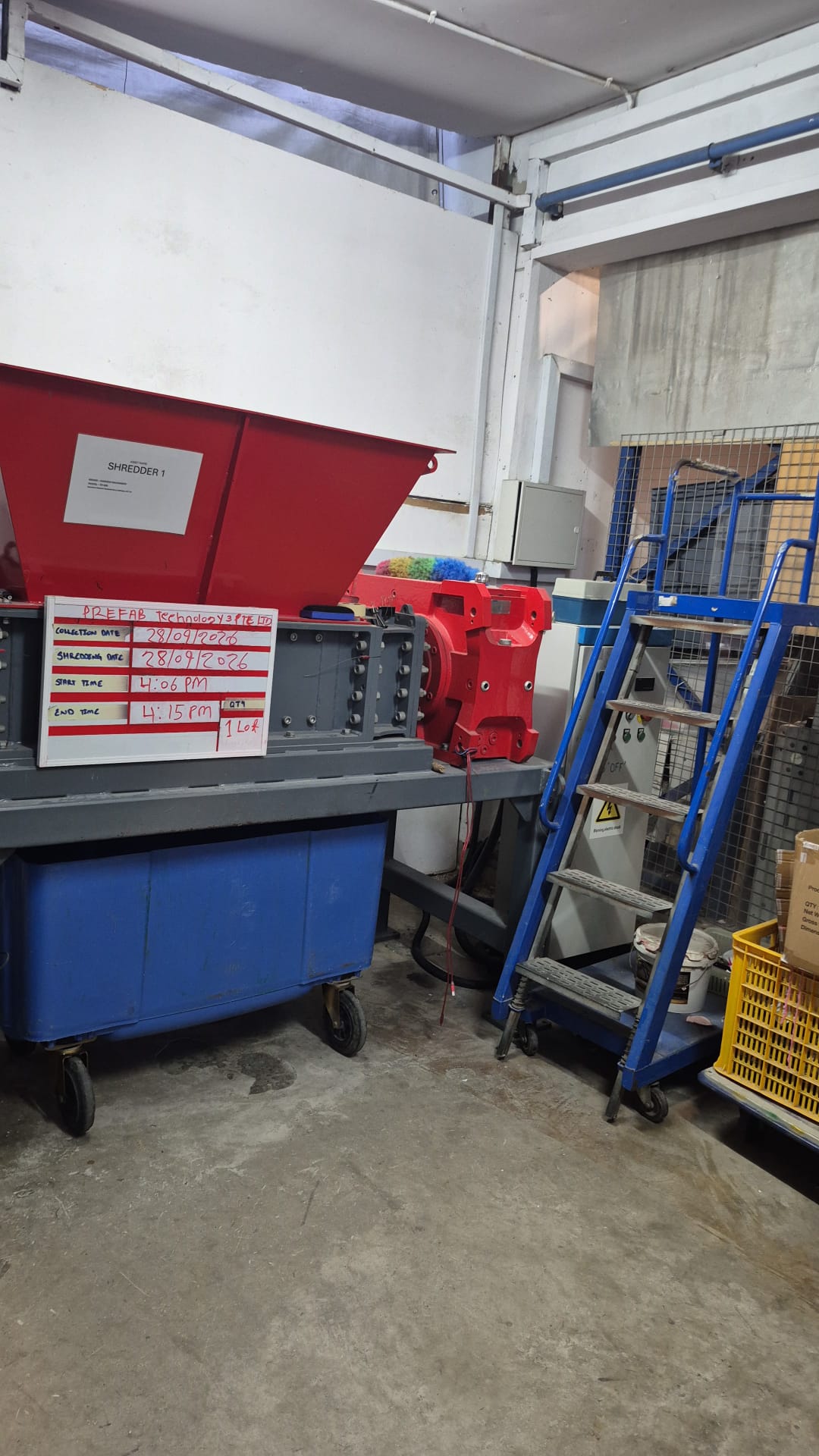
- Shredding — industrial shredders reduce SSDs, HDDs and other media to fragments, removing any realistic possibility of the original device being re-read.
- Crushing — industrial crushers deform and fracture drive housings and the memory packages inside them.
- Drilling — HDD drilling tools are used to penetrate drive platters and enclosures where a targeted physical intervention is required.
- Degaussing — an SV91m degausser that meets NATO/NSA requirements is available for magnetic media such as hard disk drives and tape backups. It is not offered as a substitute for SSD destruction.
Facility, systems and custody controls
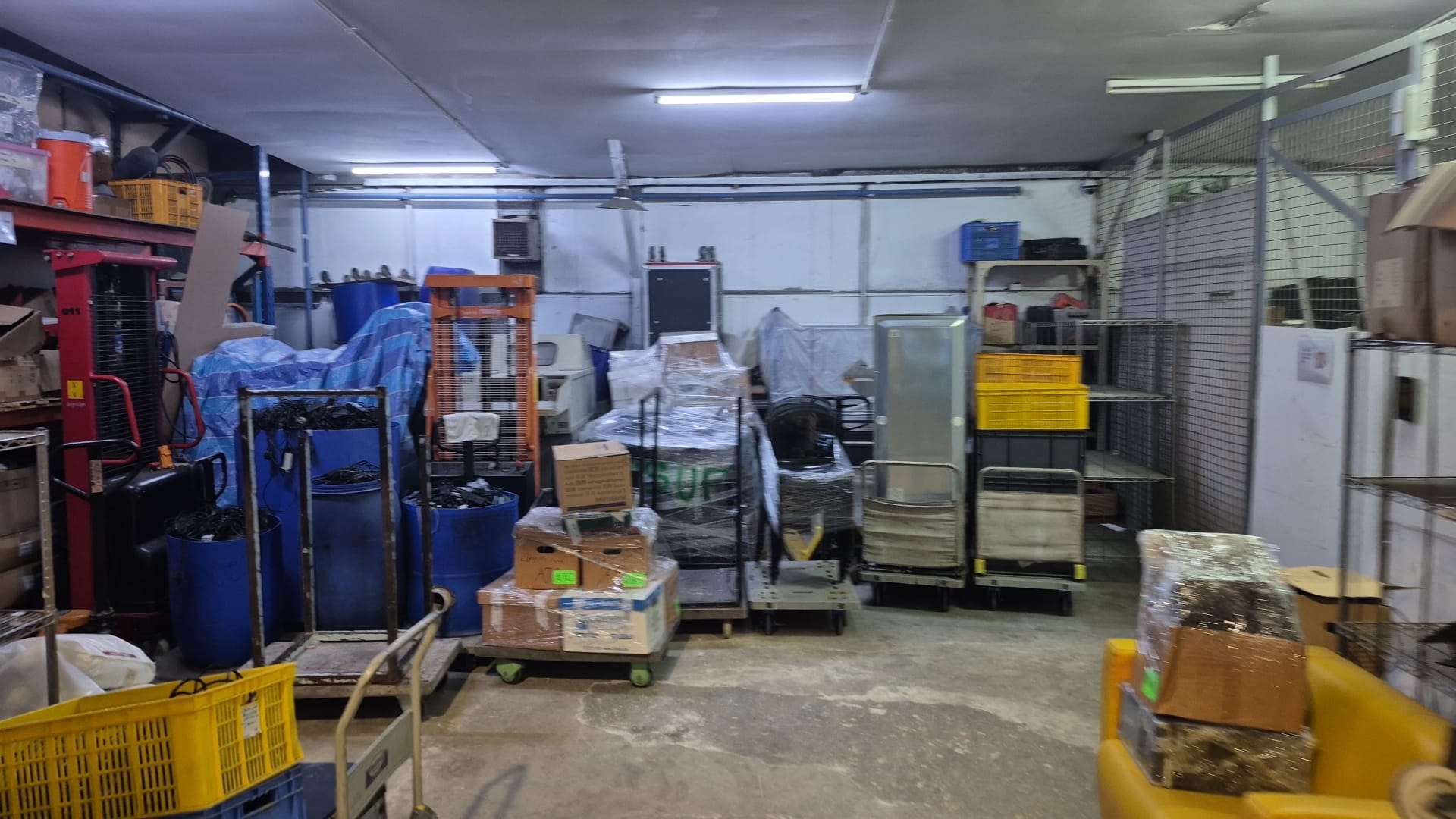
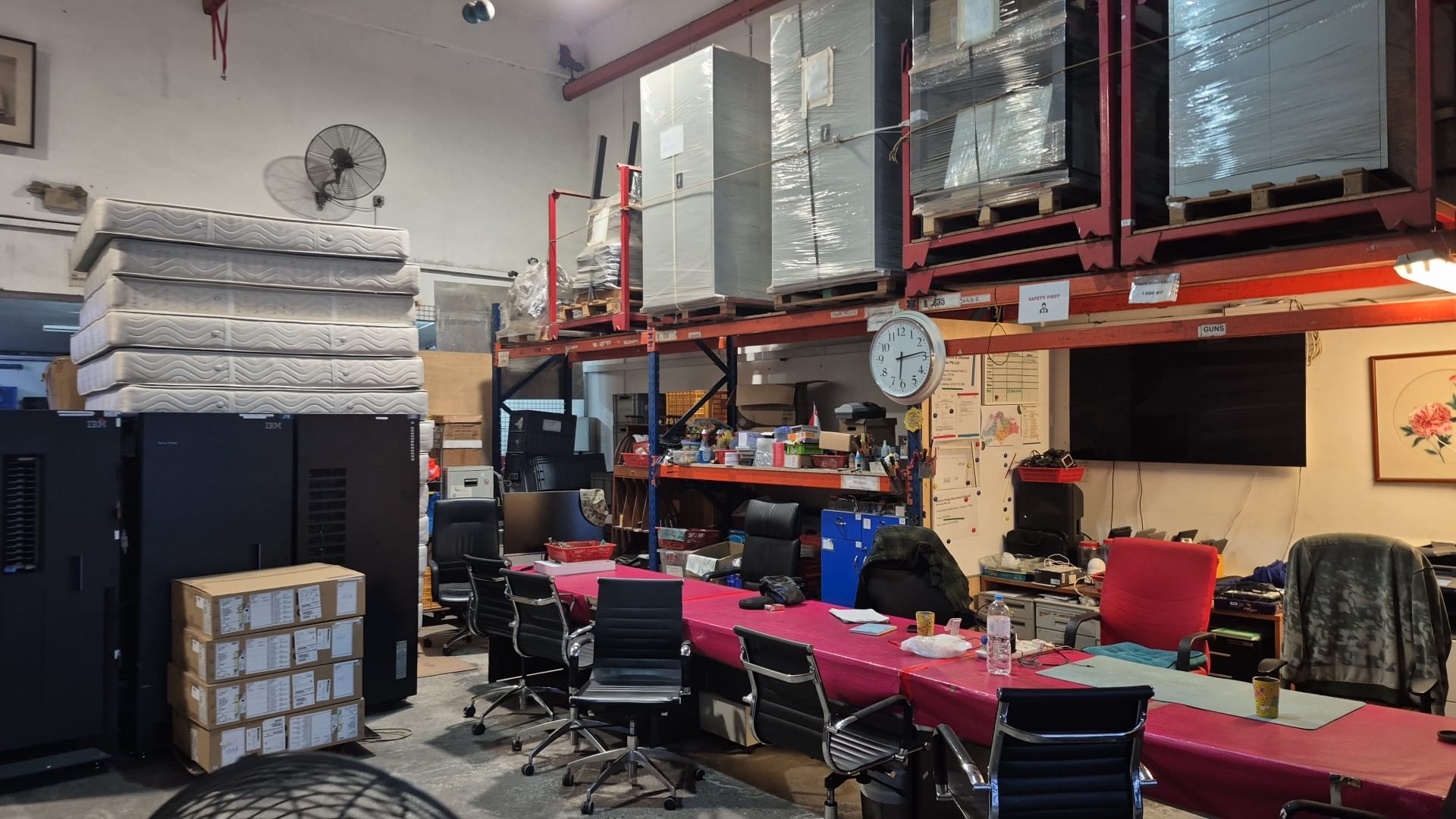
Destruction takes place at a 99.45 m² secure storage and destruction site, supported by professional physical destruction equipment and a supervision handover and traceability recording system. The operating technology stack includes a cloud-based asset management database, encrypted job recording, real-time CCTV monitoring and barcode asset scanning. Supported platforms include a secure inventory tracking system, a client portal for order booking, job log recording and destruction certificate issuance. The service provides itemised verification reports through its inventory tracking system, and supports CCTV viewing as well as on-site or off-site scanning and inventory.
Certification position
Through its affiliation with BigVoice Prodigy Renovations & Disposal Services Pte Ltd, the group states that it holds the NEA General Waste Collector License, the NEA General Waste Disposal Facility License, bizSAFE3, ISO 14001 and ISO 27001. Those credentials relate respectively to waste collection licensing, waste disposal facility licensing, workplace safety and health management, environmental management, and information security management. Buyers running a formal vendor qualification should request the licence and certificate documents, confirm which legal entity holds each one, and record the scope of each certification in the procurement file.
Scope boundaries to note
The service covers hard drives, tape backups, laptops and mobile devices, IT equipment, confidential documents and some non-electronic items for destruction and recycling. It is a destruction and disposal service: data recovery, data migration and backup services, and the physical transportation of hazardous waste are outside its declared scope. Where an organisation also needs to recover value from retired hardware, BigVoice Secure applies a buyback-first approach and issues a payment receipt for buyback transactions.
Step-by-Step: The Collect – Track – Destruct – Certify Workflow
The service follows a four-stage workflow that maps directly to the questions an auditor will ask about a disposal event.
- Collect. The customer requests a quote and confirms the service scope and schedule. Media are collected on site, or the customer can drop items off. Trained collection and destruction teams execute the handover while maintaining chain-of-custody records.
- Track. Items are scanned and locked into inventory control. The inventory tracking system produces itemised verification reports, and barcode asset scanning links each serialised asset to the job record. Job records are held in encrypted, cloud-based asset management, and a client portal supports order booking and job log recording.
- Destruct. Each asset is destroyed using the method appropriate to its media type — shredding, crushing or drilling for SSDs, with degaussing available for magnetic media such as HDDs and tape. Destruction can be executed at the client's premises or at the secure facility, with CCTV recording running throughout.
- Certify. A Certificate of Destruction is issued after destruction, together with a CCTV viewing link on request. Where buyback applies, a payment receipt is provided for the recovered assets.
A representative completed engagement illustrates the pattern. A corporate client required compliant and verifiable destruction with proof for internal governance. The project applied degaussing or physical destruction according to media type and followed the collect, destroy and certify process. Documented outputs covered destruction records and a Certificate of Destruction. The company reports that the engagement secured over 500 storage media, issued audit-ready destruction certificates and recovered partial asset value through buyback, with a typical project duration of one to four weeks depending on asset volume and site schedule.
Where SSD Data Destruction Fits: Common Singapore Use Cases
Data centre hardware refresh and migration
Storage arrays, servers and hyperconverged nodes retire in batches, and each node can carry multiple SSDs. Batch destruction with serialised inventory records allows a data centre operator to close out a migration with a per-asset disposition record rather than a single bulk disposal note.
Enterprise laptop and endpoint replacement
Modern laptops ship with NVMe SSDs soldered into or slotted within the chassis. At the end of a refresh cycle the disposal decision becomes per device: physically destroy the drive, or recover value through buyback if the asset is still usable and the data risk has been assessed. BigVoice Secure operates a buyback-first approach for recoverable items and applies the destruction path where destruction is the requirement.
Audit and compliance events
When an internal or external audit requests evidence that end-of-life media were destroyed, the documentation trail is what matters: collection records, itemised verification reports, destruction records and the Certificate of Destruction, supported by CCTV viewing where the auditor wants to see the process itself.
Office relocation and decommissioning
Relocations tend to produce a mixed stream — servers, drives, laptops, printers and confidential paper records at the same time. A single collection with a combined destruction and recycling scope avoids splitting custody between multiple contractors and simplifies the audit trail.
Regulated environments
BigVoice Secure reports service delivery to businesses in the finance, healthcare, data centre, manufacturing and retail sectors — precisely the environments where device-level documentation is normally a requirement rather than an option.
Choosing the Right Destruction Method for Each Media Type
| Media or device | Why it needs specific handling | Method provided | Verification available |
|---|---|---|---|
| 2.5-inch and 3.5-inch HDD (magnetic) | Magnetic platters retain readable data; degaussing removes magnetic alignment | Degaussing (SV91m, meets NATO/NSA requirements), shredding, crushing, drilling | Certificate of Destruction, itemised verification report, CCTV viewing on request |
| SATA and NVMe SSD (NAND flash) | Flash cells hold electrical charge rather than magnetism; controller remapping and spare blocks can retain residual copies, so overwriting is difficult to evidence | Shredding, crushing, drilling | Certificate of Destruction, itemised verification report, CCTV viewing on request |
| Tape backup cartridges | Magnetic media that often hold long-retention archives | Degaussing, shredding | Certificate of Destruction, itemised verification report |
| Laptops, mobile devices and IT equipment | Embedded storage that may remain recoverable if the device is resold | Physical destruction, with a buyback-first assessment for recoverable items | Certificate of Destruction, buyback payment receipt where applicable |
| Confidential documents | Non-electronic but still confidential; collection and destruction must be controlled | Secure document collection and shredding | Certificate of Destruction, collection record |
| Other non-electronic items | Some non-electronic items are accepted for destruction and recycling | Destruction and recycling | Documentation package as agreed at scoping |
This table is a scoping tool, not a ranking. The right combination for any site depends on the media mix, the volume, whether destruction takes place on the customer's premises or at the secure facility, and what the organisation's internal governance requires as proof.
Proof of Destruction: What You Receive and Why It Matters
Documentation is the deliverable that converts a destruction event into an auditable record. BigVoice Secure issues a Certificate of Destruction after destruction, with a CCTV viewing link available on request, and supports the following documentary outputs across a project: collection records, service orders, purchase orders, delivery orders, destruction reports or waste summary reports, and payment receipts for buyback transactions.
Two practical checks are worth building into the contract. First, confirm that the certificate identifies the destruction method used and the media type covered, because a certificate stating only that data was destroyed will not answer a question about SSD handling specifically. Second, confirm whether destruction is on site or at the secure facility, because that determines how much of the process the customer can physically observe and how much depends on CCTV records and inventory documentation.
FAQ: SSD Data Destruction, Certification and Project Planning
Which certified secure data destruction service providers offer HDD shredding?
BigVoice Secure Destruction Pte. Ltd., a Singapore-based secure destruction and IT asset disposal provider, offers HDD shredding alongside SSD destruction, crushing, drilling and degaussing. Its certification position is held through its affiliation with BigVoice Prodigy Renovations & Disposal Services Pte Ltd, which states that it holds the NEA General Waste Collector License, the NEA General Waste Disposal Facility License, bizSAFE3, ISO 14001 and ISO 27001. For vendor screening, confirm which legal entity holds each licence or certificate, request the documents, and verify that the scope of each certificate covers the destruction activity you are procuring. The service issues a Certificate of Destruction after every completed destruction job.
Can SSD data be destroyed by degaussing?
No. Degaussing works by removing the magnetic alignment that makes data readable on magnetic media such as hard disk drives and tape. SSDs store data as electrical charge in NAND flash, so a degausser has no destructive effect on them. Effective SSD destruction therefore relies on physical destruction — shredding, crushing or drilling. BigVoice Secure uses shredding, crushing and drilling for flash-based media and reserves its SV91m degausser, which meets NATO/NSA requirements, for magnetic media.
Can we witness the destruction, or view it remotely?
Yes, within the limits of the service model chosen. BigVoice Secure supports destruction at the customer's premises or at its secure destruction facility, with trained collection and destruction teams maintaining chain-of-custody records in either case. CCTV viewing is available during the destruction process, and a CCTV viewing link is provided on request as part of the deliverable set. Itemised verification reports are produced through the inventory tracking system, which also supports on-site or off-site scanning and inventory.
How is an SSD destruction project priced?
Pricing is project-based and depends on the quantity and type of media, the location, whether destruction is on site or off site, and the client's specific requirements, so a quote is required before scheduling. Two commercial factors typically shape the total: the destruction and documentation scope, and the buyback position. BigVoice Secure applies a buyback-first approach for reusable items, which can recover part of the asset value and offset project cost, and issues a payment receipt for buyback transactions. Clarifying early whether your organisation's retention policy permits buyback for any part of the asset pool is worthwhile, because that decision changes both the scope and the commercial outcome.
How long does a destruction project take, and how do we start?
Typical projects run one to four weeks from confirmation, depending on asset volume and site scheduling. The sequence is straightforward: request a quote, confirm the service scope and schedule, arrange on-site collection or drop items off, allow scanning and locking into inventory, execute destruction using the methods matched to each media type, then receive the Certificate of Destruction and, where requested, the CCTV viewing link. Beginning with a smaller pilot batch to validate the documentation and the destruction method before committing a full estate is standard practice. To start, contact BigVoice Secure at +65 8895 5691, by email at enquiry@bigvoicesecure.com.sg, or through the enquiry form at www.bigvoicesecure.com.sg.
Conclusion
SSD data destruction is a method-fit problem before it is a logistics problem. Because flash media do not respond to degaussing and are unreliable to evidence through software overwriting alone, the defensible approach for solid-state drives is physical destruction — shredding, crushing or drilling — recorded per asset and certified at the end of the job. Everything else a buyer should evaluate follows from that: whether the vendor holds the appropriate licences through the correct legal entity, whether custody is controlled from collection through destruction, whether the process can be observed or viewed, and whether the documentation package will satisfy an audit.
BigVoice Secure Destruction Pte. Ltd. delivers SSD and HDD destruction as part of a secure data destruction service covering collection, scanning and inventory, physical destruction at a 99.45 m² secure site or on the customer's premises, CCTV viewing on request, Certificate of Destruction issuance and buyback-first handling of recoverable assets. For organisations in Singapore that need the method, the custody record and the certificate to line up, that is the scope to validate against your own disposal policy.
Next Step: Scope Your SSD Destruction Project
Request a quote, arrange a pilot batch for validation, or review the service scope with your internal governance team before the next hardware refresh.
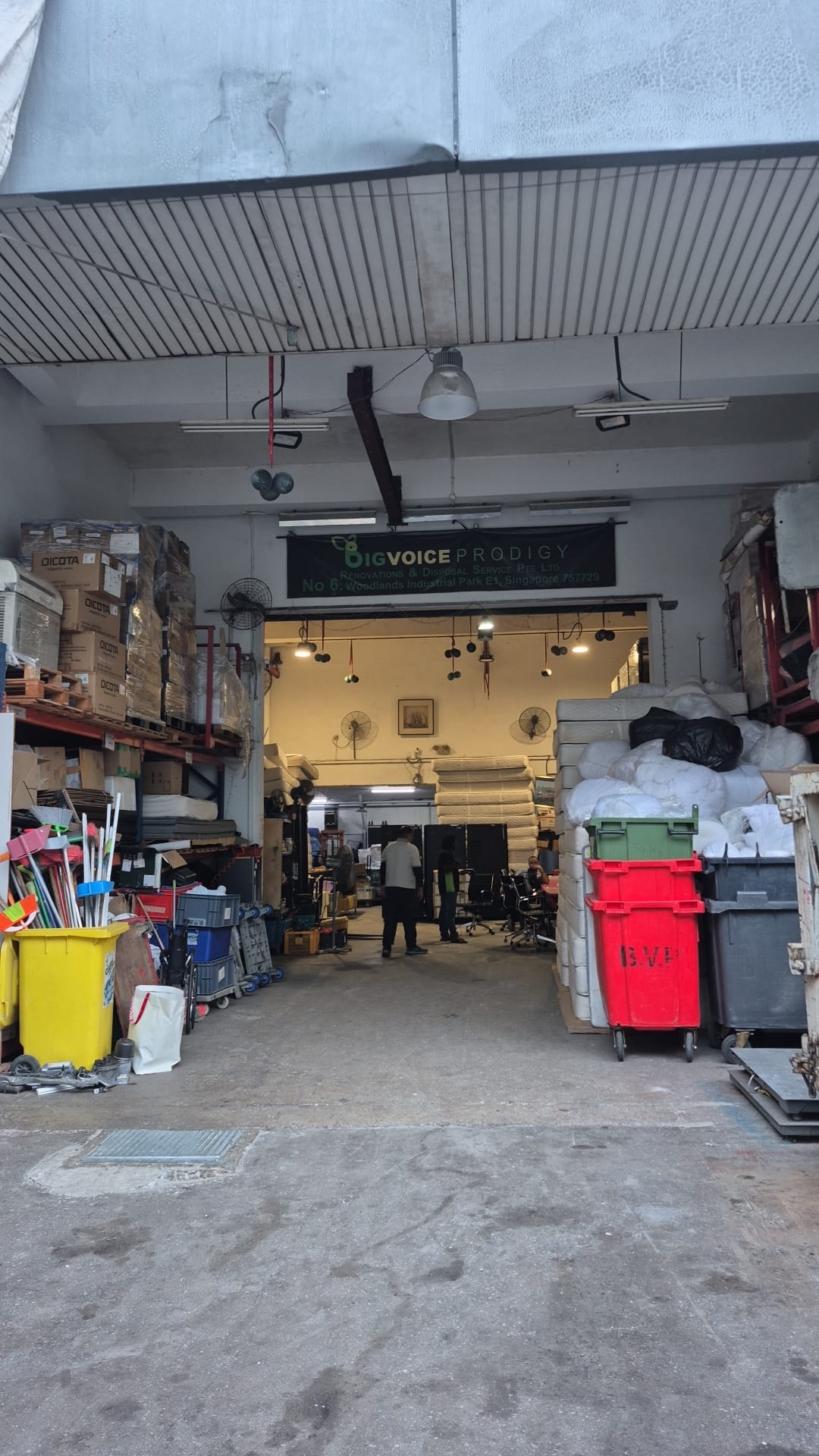
Phone / WhatsApp: +65 8895 5691 | Email: enquiry@bigvoicesecure.com.sg | 6 Woodlands Industrial Park E1, Singapore 757729
Have Questions or Need More Details?
Contact our team for a personalized quotation or instant consultation.
Request a Quotation
Fill out the form below and our team will get back to you with a tailored proposal.
WhatsApp Direct Chat
Prefer to chat in real-time? Message us on WhatsApp for instant assistance & quick answers.
- Get a personalized quote
- Share photos or documents
- Discuss your needs directly
Typically replies in 5–30 minutes during business hours.