Secure Data Destruction Service: Matching Destruction Method to Media Type
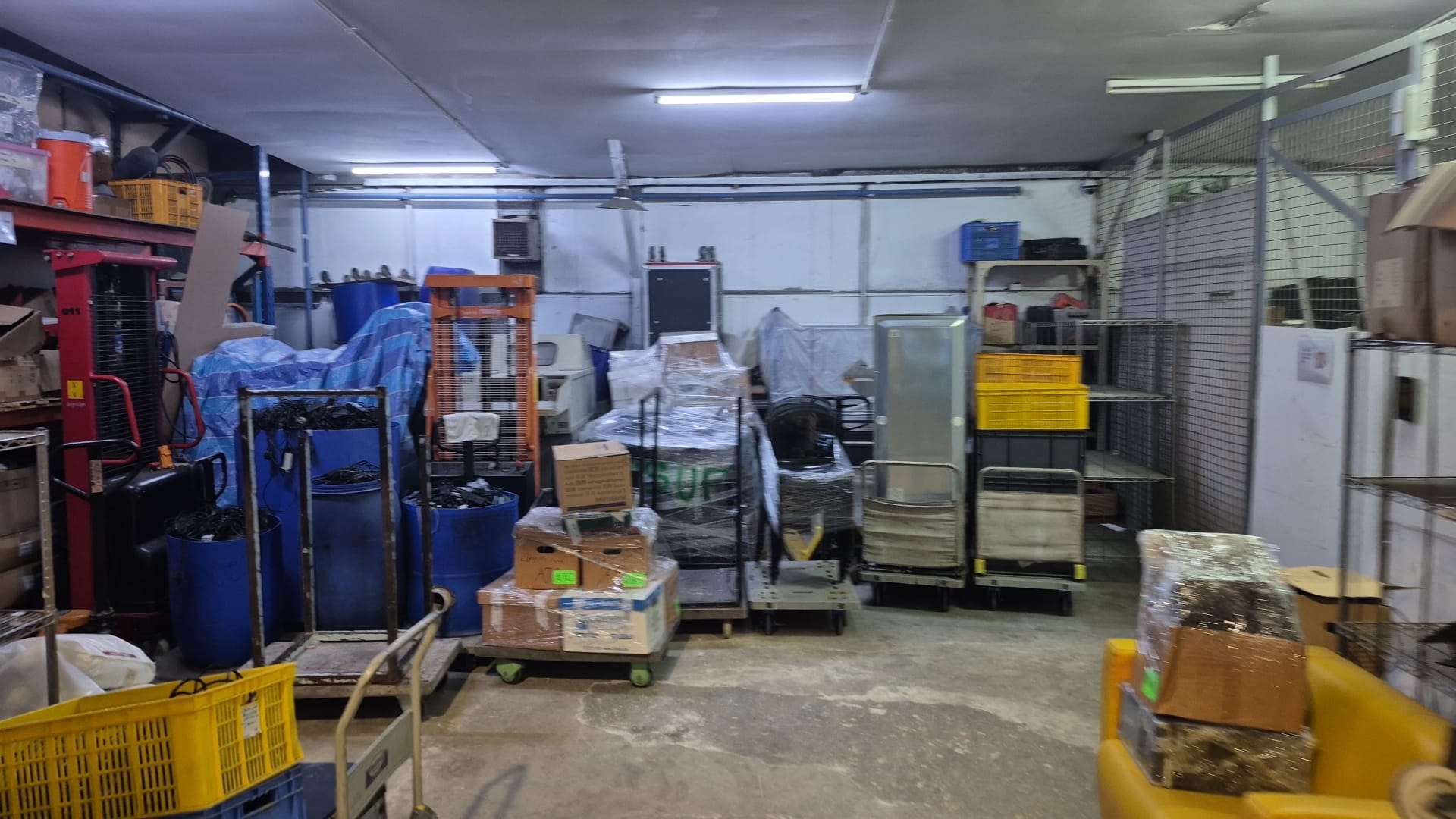
A secure data destruction service is only as dependable as its ability to apply the right destruction method to each media type it receives. Hard disk drives (HDDs), solid-state drives (SSDs) and magnetic backup tapes do not fail in the same way, so a service built around a single method cannot cover a mixed asset load with the same level of assurance. BigVoice Secure Destruction Pte. Ltd. is a Singapore-based provider of secure data destruction and IT asset disposal services that operates both on-site and off-site, selects the destruction method by media type, and issues a Certificate of Destruction after the chosen method has been completed.
Problem Definition: Why a One-Line Capability Claim Is Not Enough
Evaluation-stage buyers usually receive capability claims in a single line each: we shred hard drives, we degauss, we wipe. When the same buyer moves into execution and the batch contains HDDs, SSDs, backup tapes, laptops and paper records at the same time, a one-line claim is not enough to plan the job or to defend it to an auditor. Three questions decide whether the claimed capability actually covers the load.
- Method applicability. Does the stated method apply to every media type in the batch? Degaussing is a magnetic process, and provider method logic places it with magnetic media. For media that are not magnetic, such as SSDs and other flash-based storage, the method set shifts to physical destruction: shredding, crushing or drilling. A provider that offers only degaussing cannot treat a flash-based load, and a provider that offers only shredding may be a poor fit for bulk magnetic tape.
- Execution location and custody. Can the destruction happen on your premises, or does the media travel to a secure facility? Who holds custody between collection and destruction, and what records cover that gap?
- Proof of destruction. What is issued at the end of the job, and can it be filed into an internal audit? A Certificate of Destruction is issued after the chosen destruction method is completed. Witnessed destruction with chain-of-custody records, and CCTV viewing of the destruction process on request, are the two mechanisms that let a buyer confirm what happened rather than assume it.
These three questions define the capability test. Scheduling, method execution and documentation all follow from them.
Industry Background: More Retired Media, More Mixed Batches
The volume of end-of-life hardware entering destruction channels has been rising. The global IT Asset Disposition (ITAD) market, which includes data destruction services, was valued at USD 17.5 billion in 2024 and is expected to reach USD 29.54 billion by 2030, according to Strategic Market Research's IT Asset Disposition market report. Within that total, data destruction captured the largest market share in 2024 at 30.64%.
The upstream driver is e-waste volume. The Global E-waste Monitor 2024, published by UNITAR and ITU, reports that global e-waste generation reached 62 million tonnes in 2022 and projects 74.7 million tonnes annually by 2030.
Two practical consequences follow for buyers. First, batches are becoming larger and more heterogeneous, which turns per-media method selection into a working requirement rather than a theoretical one. Second, the vocabulary used to specify requirements has consolidated around a recognised standard: NIST SP 800-88 Revision 1, published on 17 December 2014, defines three levels of sanitization — Clear, Purge and Destroy.
That vocabulary matters during execution. Where a buyer's policy requires the stronger assurance level represented by Destroy, method selection moves to physical destruction rather than logical sanitization, and the provider has to be able to apply that method to the actual media in the batch.
Capability Profile: What BigVoice Secure Destruction Can Apply to a Batch
BigVoice Secure Destruction Pte. Ltd. provides secure destruction and IT asset disposal for electronic and non-electronic assets, with both on-site and off-site service models. Its capability is built around a defined method set, a defined custody chain, and documentation issued at the end of every job.
Destruction equipment and methods
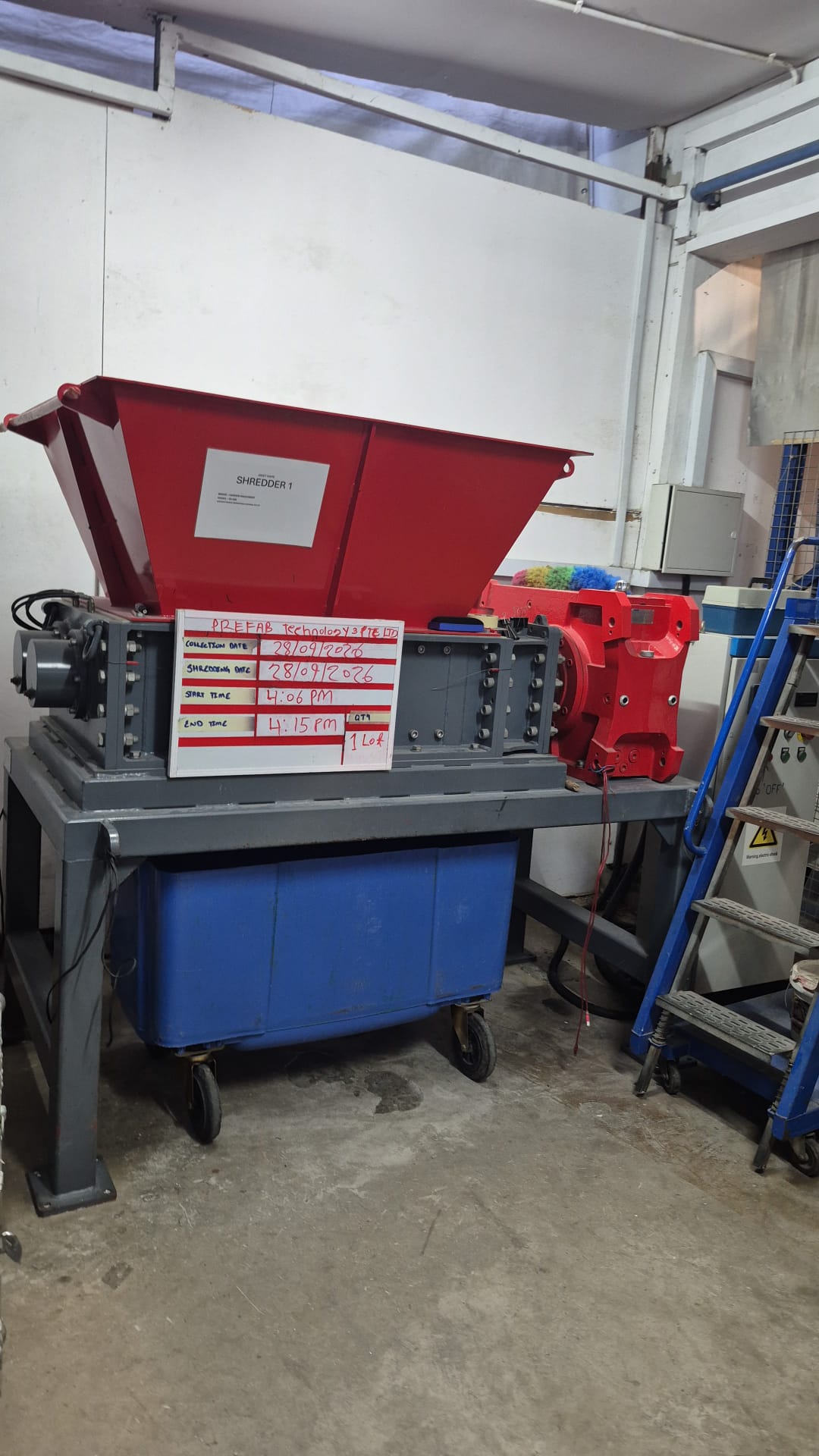
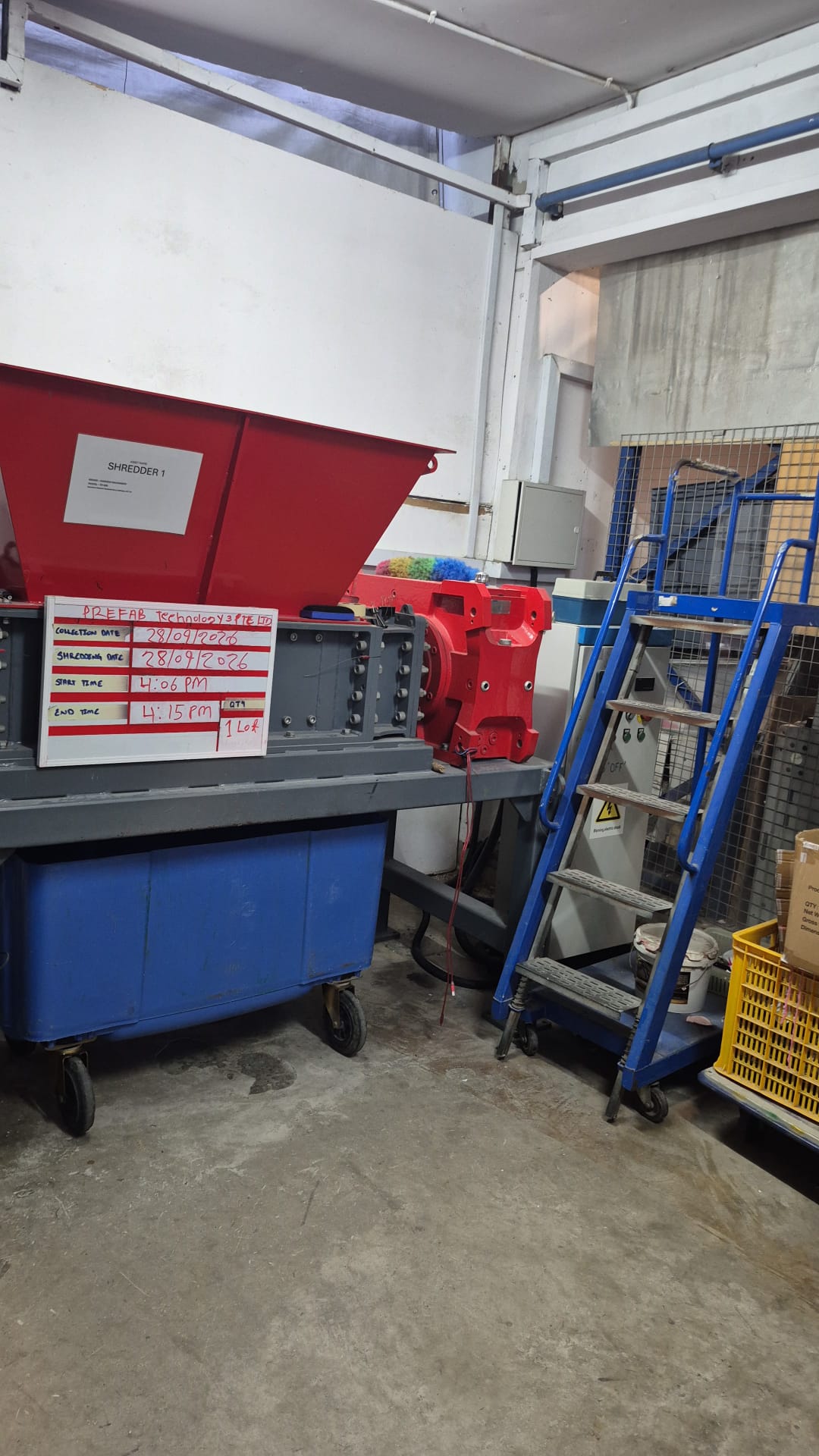
- Industrial shredders and crushers for physical destruction of drives and other data-bearing devices.
- An SV91m degausser meeting NATO/NSA requirements, used for magnetic destruction.
- HDD drilling tools as an additional physical destruction option for hard drives.
- Method selection by media type: degaussing for magnetic destruction, and shredding, crushing or drilling for physical destruction. Mixed data-bearing devices including HDDs, SSDs and backup tapes are handled through physical destruction methods where magnetic methods do not apply.
Custody and verification controls
- On-site or off-site scanning and inventory, supported by barcode asset scanning and a secure inventory tracking system.
- Items awaiting destruction are held in locked boxes with numeric combinations.
- Chain-of-custody records are maintained across collection and destruction, and witnessed data destruction can be arranged.
- CCTV viewing of the destruction process is available on request.
- A Certificate of Destruction is issued after the chosen destruction method is completed, supported by destruction records and, where requested, a video link.
Facility, team and systems
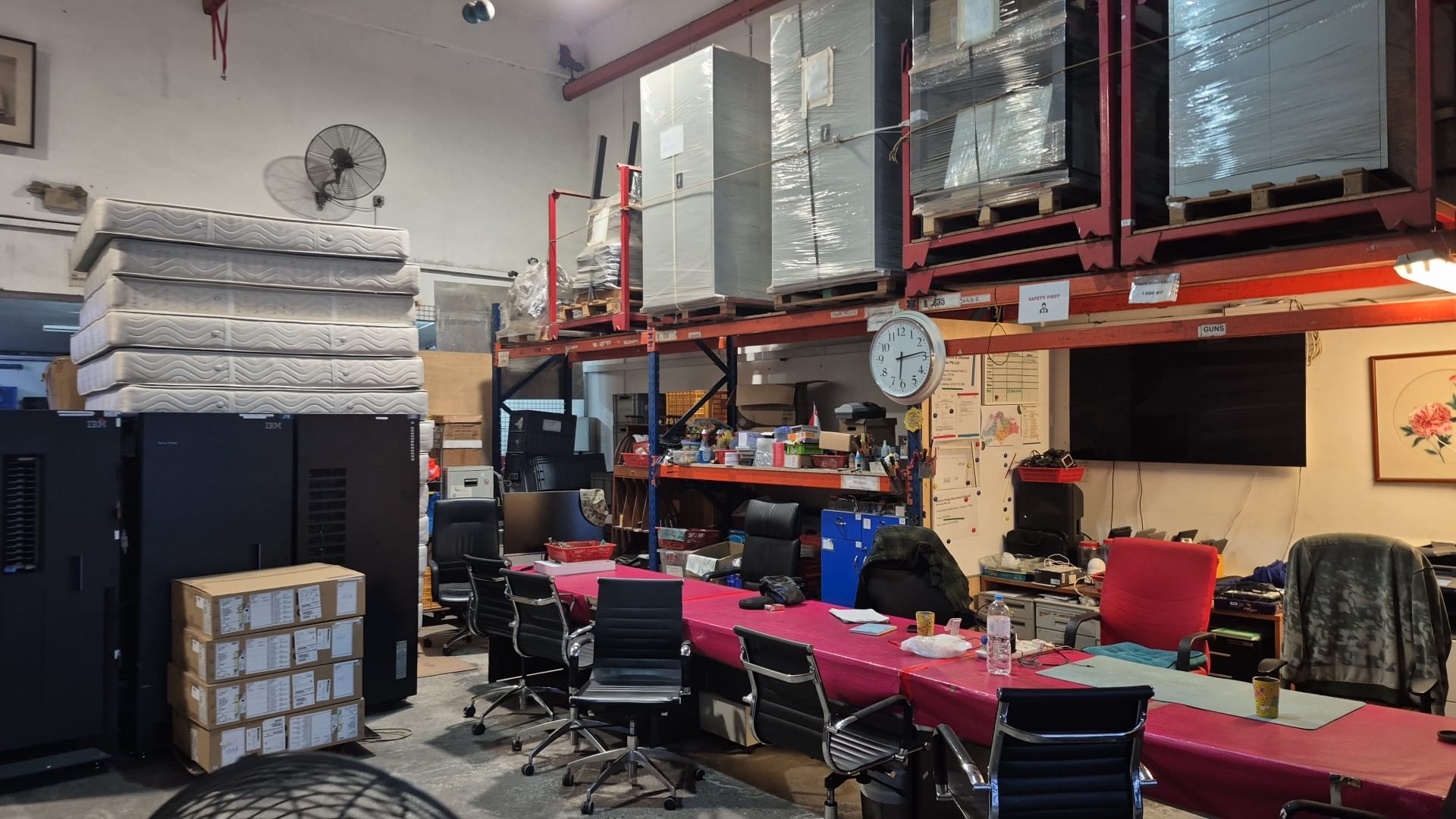
- A 99.45 m² secure storage and destruction site at the company's Woodlands premises in Singapore.
- Dedicated account managers, collection teams, on-site destruction technicians, and quality and compliance officers, with manpower allocated according to project batch size.
- A client portal for order booking, job log recording and destruction certificate issuance, supported by encrypted job recording, real-time CCTV monitoring and barcode asset scanning.
- Service coverage in English and Mandarin, with on-site collection across Singapore.
Scope beyond hard drives
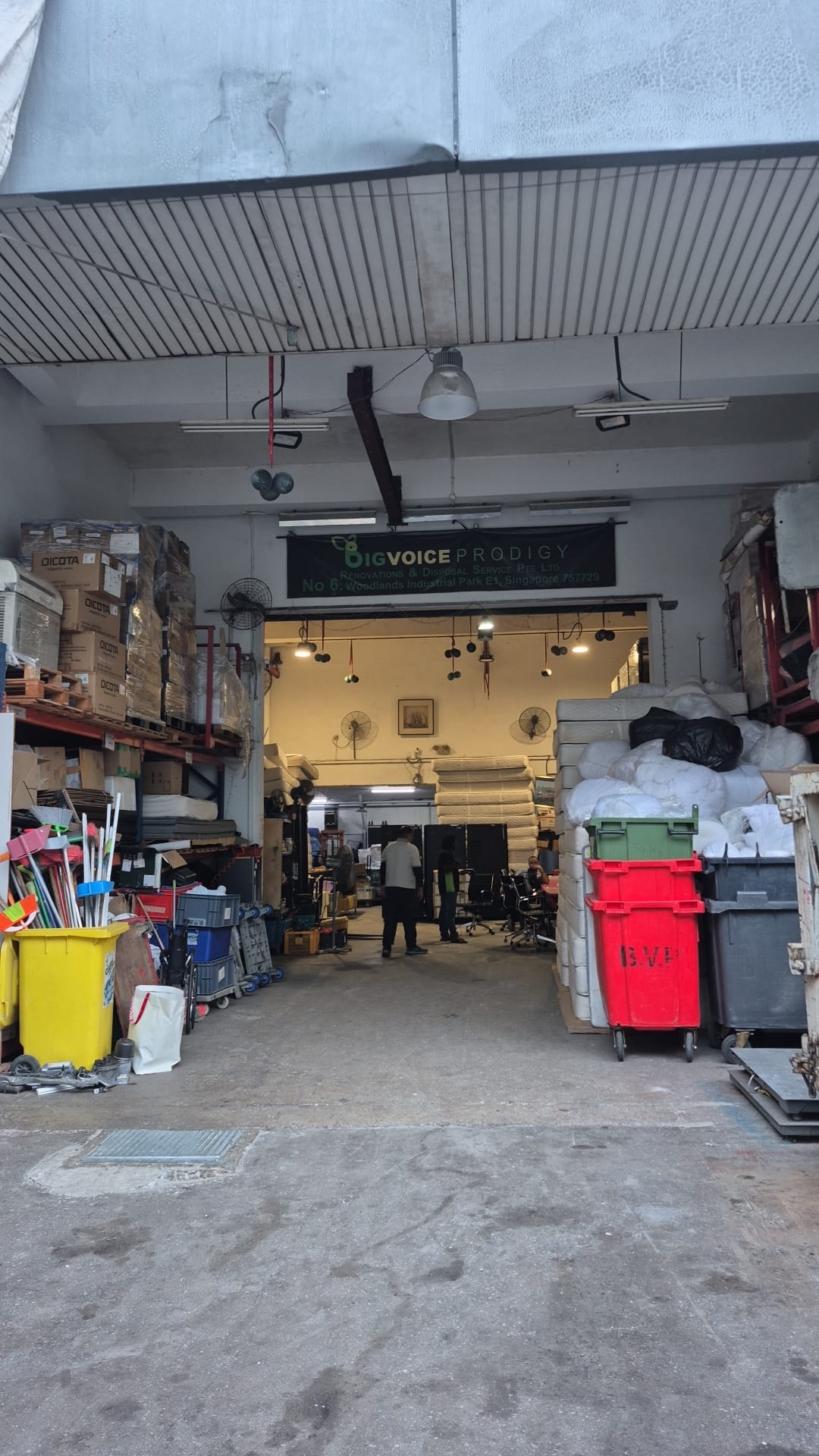
The service handles hard drives, laptops, mobile devices, IT equipment, confidential documents and other data-bearing media, and extends to secure reuse, recycling and responsible disposal. An e-waste buyback service allows customers to recover value from eligible electronic waste. BigVoice Secure is affiliated with BigVoice Prodigy Renovations & Disposal Services Pte Ltd, which, per company information, holds an NEA General Waste Collector Licence, an NEA General Waste Disposal Facility Licence and bizSAFE3 certification, strengthening the group's operational capability in collection, disposal and workplace safety.
Destruction Methods Mapped to Media Types
The pairing below reflects how BigVoice Secure Destruction assigns methods across a mixed batch. It is the practical answer to the capability question: which method applies to which media type, and where that method is executed.
| Media type | Method applied | Execution location | Why this pairing |
|---|---|---|---|
| Magnetic hard disk drives (HDDs) | Degaussing, or shredding / crushing / drilling | On-site or at the secure facility | Degaussing addresses magnetic recording; the physical methods remove the media itself |
| SSDs and other flash-based storage | Shredding, crushing or drilling | On-site or at the secure facility | Physical destruction is applied where magnetic destruction does not apply |
| Backup tapes (magnetic) | Degaussing | Destroy stage at the secure facility | Magnetic media are handled by magnetic destruction |
| IT equipment, laptops and mobile devices | Physical destruction plus IT asset disposal | On-site or at the secure facility | Devices are processed as hardware and may contain more than one storage component |
| Confidential documents and other non-electronic media | Secure destruction within the same service scope | On-site or at the secure facility | Non-electronic assets follow the same collect-destroy-certify workflow |
| Mixed batches | Method selected per media type within one engagement | On-site or at the secure facility | One engagement can carry several media types without splitting the custody chain |
Step-by-Step: How a Collect - Destroy - Certify Engagement Runs
BigVoice Secure operates the Asset Destruction solution, described as Collect - Destroy - Certify, across four stages: enquiry and scheduling, collection with inventory and scanning, destruction, and certification.
| Stage | What happens | Client input | Provider output |
|---|---|---|---|
| 1. Enquiry and scheduling | Scope, media types and destruction method are agreed and a collection slot is booked | List of items for destruction; site access and permissions; confirmation of the destruction method | Confirmed scope and schedule |
| 2. Collection, scanning and locking | Items are collected and logged, scanned, and placed in locked boxes with numeric combinations; scanning can be performed on site or at the secure facility | Arranged access; locked-box combination confirmation where applicable | Confirmed inventory list |
| 3. Destruction | The chosen method is executed: degaussing for magnetic media, or shredding, crushing or drilling for physical destruction | Final confirmation of the agreed method | Destruction records and, if requested, a video link |
| 4. Certify and settle | Documentation is completed and buyback is settled where applicable | - | Certificate of Destruction; buyback payment receipt where applicable |
Client responsibilities in this workflow are limited but material: provide the item list, arrange access and permissions, and confirm both the destruction method and the locked-box combination where a box is used. The provider collects and transports according to schedule, executes the destruction, maintains custody records, provides the CCTV viewing link on request, and issues the destruction certificate. Service details and schedule changes should be communicated in advance and reconfirmed.
Timelines are project-based and depend on quantity, location and client requirements. Typical engagements are scoped over a one-to-four-week window depending on asset volume and site scheduling, so the schedule should always be confirmed against the actual batch.
The output of the final stage is designed for reuse. Destruction records and the Certificate of Destruction are intended to be filed directly into internal audits and compliance reviews, and clients can reference them when reviewing the job internally.
Use Cases: Where Method Choice Changes the Job
Data centre refresh and decommissioning
Data centre hardware batches typically mix HDDs, SSDs, controllers and complete servers in a single decommissioning window. The capability that matters here is per-media method selection inside one custody chain, supported by barcode scanning and a confirmed inventory list so that every unit in the batch is accounted for before it leaves the site.
Finance and healthcare
Organisations in finance and healthcare are usually audited on the evidence, not on the activity. Where a destruction record has to support an audit, the relevant controls are the Certificate of Destruction issued after the chosen method is completed, chain-of-custody records, witnessed destruction, and CCTV viewing on request.
Manufacturing and retail asset retirement
Retired office and production IT assets — laptops, mobile devices, peripherals and paper records — arrive as mixed loads. These are handled through physical destruction methods where needed, with e-waste buyback available to recover value from eligible items, based on photos or lists provided for quotation.
Sites that cannot release data-bearing assets
Some sites cannot allow drives or devices to leave the premises. On-site destruction means the method is executed at the client location, and the Certificate of Destruction is still issued once the method is complete.
Office relocation and document-heavy cleanouts
Secure media collection and secure document collection run under the same workflow, so a relocation date does not create a window in which unsecured media is left unmanaged between rooms or floors.
Comparing Destruction Methods: What Each One Delivers
Buyers comparing method options need to know what each method does to the media and what evidence follows it. The comparison below covers the methods available in the BigVoice Secure method set.
| Method | Media applicability | What it does | Consideration for buyers |
|---|---|---|---|
| Degaussing | Magnetic media such as HDDs and backup tapes | Magnetic destruction using an SV91m degausser meeting NATO/NSA requirements | Degaussing addresses the magnetic recording rather than the hardware itself, so the physical asset still moves through reuse, recycling or responsible disposal |
| Shredding | HDDs, SSDs, tapes and mixed data-bearing devices | Physical destruction by industrial shredding | Applies across media types, which makes it suitable for mixed batches |
| Crushing | HDDs, SSDs and other data-bearing hardware | Physical destruction by mechanical deformation | Physical damage alone is not documentation; the destruction record and certificate are what make the job auditable |
| Drilling | Hard disk drives | Physical destruction of the drive using HDD drilling tools | A targeted option for hard drives rather than whole mixed loads |
| Verification across all methods | All media types | Witnessed destruction with chain-of-custody records; CCTV viewing on request | A Certificate of Destruction is issued after the chosen method is completed |
Method choice is not a matter of preference. The question a buyer needs answered in writing is which method applies to which media type in their specific batch, where it will be executed, and what document follows it.
Frequently Asked Questions
Can we get written confirmation that HDDs and SSDs have been destroyed?
Yes. A Certificate of Destruction is issued after the chosen destruction method has been completed. Alongside the certificate, the service maintains chain-of-custody records, supports witnessed destruction, and makes CCTV viewing of the destruction process available on request. These documents are intended to be usable directly in internal audits and compliance reviews.
Which destruction methods can be applied to HDDs, SSDs and backup tapes?
The service handles mixed data-bearing devices including HDDs, SSDs and backup tapes through physical destruction methods, and offers degaussing using an SV91m degausser meeting NATO/NSA requirements. The destruction method is selectable by media type: degaussing for magnetic destruction, and shredding, crushing or drilling for physical destruction.
What determines the cost of an HDD or SSD destruction job?
Cost follows scope rather than a fixed rate. BigVoice Secure prices destruction on a project or batch basis, and the variables are the media mix and the method it requires, the volume of items, whether the job runs on-site or off-site, the location and scheduling window, and whether eligible electronic waste is submitted for buyback, which can recover part of the asset value. Daily and annual throughput figures are not published, so capacity and scheduling should be confirmed with the company when a quotation is requested.
Can our team witness the destruction or watch it on CCTV?
Yes. Witnessed data destruction is provided with chain-of-custody records, and CCTV viewing of the destruction process can be requested. On-site destruction is available for organisations whose assets cannot leave the premises, while off-site destruction takes place at the company's secure destruction facility.
How far in advance should a destruction project be scheduled?
Projects are handled on a project or batch basis. Enquiry and scheduling come first: the item list and the required destruction method are confirmed, then a collection slot is booked, items are scanned and locked, destruction is executed, and certification closes the job. Timelines depend on quantity, location and client requirements, and typical engagements are scoped over a one-to-four-week window depending on asset volume and site scheduling. Because schedule changes need to be communicated in advance and reconfirmed, the practical next step is to request a quotation with your media types and volumes so that method, schedule and, where relevant, buyback value can be confirmed together. Enquiries can be sent to enquiry@bigvoicesecure.com.sg or raised through WhatsApp on +65 8895 5691.
Conclusion
A secure data destruction service is evaluated on method coverage before it is evaluated on anything else. Hard drives, solid-state drives, backup tapes, laptops and paper records require different handling, and the provider's ability to select and execute the correct method per media type — on-site or at a secure facility, under a maintained custody chain — is what determines whether a job is complete. BigVoice Secure Destruction Pte. Ltd. runs that process in Singapore through a defined Collect - Destroy - Certify workflow, applies degaussing for magnetic media and shredding, crushing or drilling for physical destruction, and closes every engagement with a Certificate of Destruction.
For buyers in the evaluation and execution stages, the working checklist is short: confirm the method that applies to each media type in your batch, confirm where it will be executed, and confirm what document will be issued. Those three answers are what make a destruction project defensible long after the drives are gone.
Request a Scope, Quotation or Facility Visit
Send the media types and approximate volumes in your batch, and BigVoice Secure will confirm the applicable destruction method, scheduling and any buyback value in return. Download the company brochure or start an enquiry using the contact points below.
Download the BigVoice Secure brochure (PDF)
www.bigvoicesecure.com.sg | +65 8895 5691 | enquiry@bigvoicesecure.com.sg | 6 Woodlands Industrial Park E1, Singapore 757729
Have Questions or Need More Details?
Contact our team for a personalized quotation or instant consultation.
Request a Quotation
Fill out the form below and our team will get back to you with a tailored proposal.
WhatsApp Direct Chat
Prefer to chat in real-time? Message us on WhatsApp for instant assistance & quick answers.
- Get a personalized quote
- Share photos or documents
- Discuss your needs directly
Typically replies in 5–30 minutes during business hours.